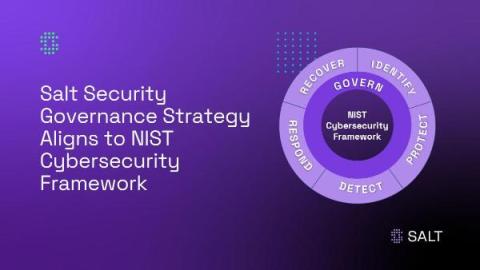
Salt Security, API Posture Governance, and the NIST Cybersecurity Framework 2.0

Securing organizations against today’s most advanced threats continues to be challenging, with APIs (Application Programming Interfaces)playing an increasingly central and vulnerable role, especially as digital transformation marches on. The NIST Cybersecurity Framework 2.0 (CSF) release underscores the urgency of addressing evolving threats and now emphasizes the importance of governance in Cybersecurity.

What Is MXDR and Why Do You Need It?

Managed XDR (MXDR) is a service-led security solution that uses a wide range of telemetry sources to better unify and automate incident investigation, analysis, and response. Extended Detection and Response (XDR) is the technology at the heart of MXDR. It is a security platform that unifies telemetry across multiple security layers, such as networks, endpoints, applications, email, identities, and cloud services, into a single platform.

Protecting Amazon S3 with Rubrik Security Cloud

AWS S3 object storage is one of the most adopted services in the cloud. At the same time, cyberattacks are on the rise, with the cloud becoming the preferred target and often specifically focusing an organization’s data like in S3. With Rubrik, you can ensure your S3 data is resilient and recoverable from cyberattacks and operational failures while taking advantage of.

What Are the Cybersecurity Risks of Remote Work?

Working remotely has allowed organizations to enhance their efficiency and provide employees with flexibility. However, remote work comes with cybersecurity risks that can often lead to data breaches and jeopardize an organization’s security. The five cybersecurity risks of remote work are using weak passwords, an insecure internet connection, unencrypted file sharing, an expanded attack surface and the use of personal devices.

How to Disseminate Honeytokens At Scale: Step-by-Step Guide to Deployment Jobs

Learn how GitGuardian Honeytoken's new feature, Deployment Jobs, revolutionizes early breach detection and code repository protection. Automate honeytoken deployment across multiple repositories with ease, ensuring ongoing security and peace of mind.

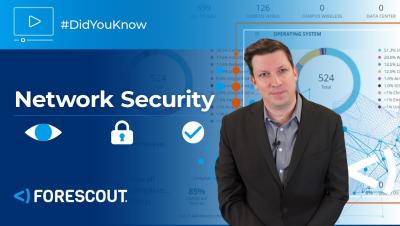
#DidYouKnow Network Security

#DidYouKnow? The first step in cyber security is knowing WHAT you are securing! Forescout shows you every asset… what is it, who owns it, where it is and when it connected to your network. Through the power of control you can automate hundreds of tasks, including network isolation to limit the blast radius and give you time to investigate!

Learn more at https://www.forescout.com/

Why Identity Security Is Essential to Cybersecurity Strategy

In the modern digital landscape, cybersecurity isn’t just a technical challenge – it’s a business imperative. At the heart of cybersecurity is identity security – the principle that the right people have the right access at the right time. As we venture further into the digital world, protecting the business from modern threats is crucial, which inherently adds complexity, making smart privilege controls a must-have step toward an identity-first strategy.

Netskope One Platform Demo

Unrivaled visibility. Real-time data and threat protection. The Netskope One platform unifies all the core components of a SASE architecture, including Secure Web Gateway (SWG), Cloud Access Security Broker (CASB), Zero Trust Network Access (ZTNA), Cloud Firewall (FWaaS) and Software Defined WAN (SD-WAN) all with a single engine and policy framework.

Using the AWS CLI with Amazon Linux

Amazon Web Services (AWS) provides a wide array of cloud computing solutions. Mastering the AWS Command Line Interface (CLI) is an essential skill for developers, system administrators, and cloud engineers working within its ecosystem. Amazon Linux, an open source Linux distribution provided by AWS, is optimized for running on AWS infrastructure, making it a popular choice for cloud-based applications.

FAQ: What is FIPS 140-2 and "Validated Cryptography"?

As time marches on and technology develops, there’s a constant push and pull between information security and attempts to breach that security. Obscurity – simply hiding from sight – isn’t enough with automated processes capable of scanning any possible address looking for signs of life, so much of modern computer security comes down to cryptography. Pretty much everyone has some experience with cryptography, from our childhood spy media to modern computer science.