Should You Change Your Password Every 90 Days?

No, you don’t have to change your password every 90 days. This idea of regularly changing your password is known as password rotation. The main benefit of changing your passwords so often is to prevent unauthorized users from accessing private information. For personal accounts, changing your passwords every 90 days can actually end up being worse than keeping them the same.


The 5 Fundamental Pillars of the Digital Operational Resilience Act (DORA)

Nowadays, financial organizations rely heavily on information and communication technology (ICT) to support remote operations. While ICT enhances operational efficiency and customer experience, it significantly increases cybersecurity risks in the financial sector. To mitigate cybersecurity risks related to ICT, the European Union (EU) has developed a specific regulation: the Digital Operational Resilience Act.

CVE of the month, the supply chain vulnerability hidden for 10 years CVE-2024-38368

For over a decade, a massive vulnerability that could have unleashed a huge supply chain attack lay dormant. Luckily the good guys found it first or so it seems. This month we are taking a look at CVE-2024-38368.

Your Cybersecurity Risk Is Higher on July 4

While the Fourth of July is typically considered a day of celebration for those in the U.S., many don’t realize it’s also a period of heightened risk. In fact, this isn’t unique to the Fourth of July: holidays often see an uptick in cybersecurity threats. With the Fourth of July nearly upon us, let’s examine why this happens and how you can protect yourself and your business.

New Exploit in Microsoft MSHTML Delivers MerkSpy Spyware Tool

A newly discovered spyware tool named MerkSpy is targeting users in Canada, India, Poland, and the U.S., exploiting a patched security flaw in Microsoft MSHTML. This campaign, identified by Foresiet researchers, highlights the critical need for vigilant cybersecurity practices, including stolen credentials detection, darknet monitoring services, and digital footprint analysis. Attack Overview The attack begins with a Microsoft Word document disguised as a job description for a software engineer.

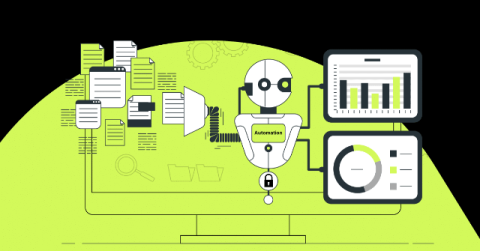
The Role of Automation in Enforcing the Principle of Least Privilege

As businesses continue to expand their reliance on cloud security and privileged access management, the imperative to implement least privilege access in a manner both effective and efficient cannot be overstated. Yet, with the increasing complexity of information systems and the proliferation of privileged accounts, manually administering and enforcing the least privilege principle poses substantial challenges.
Featured Post

Why regulation is the cornerstone of AI development

By now, we're very familiar with the game-changing potential of AI. The rapid rise of ChatGPT has shown us just how quickly the technology has gone from concept to the palm of our hands. AI has the ability to dramatically accelerate workflows, and subsequently free up businesses to focus on strengthening their security and build customer trust. Why then is the UK's security industry so short on confidence when it comes to using it? One reason: a lack of regulation.

Likely Disclosure Inconsistencies With Massive Snowflake Data Breach

‍After unearthing evidence as early as May 2024, cloud computing–company Snowflake released an official statement on June 2, reporting that they were investigating a series of targeted cyber events. A week later, Google's Mandiant, who, alongside Crowdstrike, is aiding Snowflake in this investigation, concluded that clients had been attacked after malicious actors had gotten access to compromised credentials.