Agentic AI in security operations: Friend, risk, or both

Agentic AI is forcing a hard question on every security leader: when your SOC is full of autonomous “doers” instead of just dashboards and scripts, is that your new best friend or a brand‑new risk surface you barely understand? The honest answer is both, and the way you design, govern, and deploy these systems will decide which side wins.

The 5 best GRC software solutions for CMMC compliance in 2026

Accelerating security solutions for small businesses‍ Tagore offers strategic services to small businesses. A partnership that can scale‍ Tagore prioritized finding a managed compliance partner with an established product, dedicated support team, and rapid release rate. Standing out from competitors‍ Tagore's partnership with Vanta enhances its strategic focus and deepens client value, creating differentiation in a competitive market.

Breaking the Cycle of Technical Debt with Agentic Exposure Management

In this video, Rob Babb, Exposure Management Strategist at Seemplicity, shares key insights from a presentation at ISACA Atlanta’s Geek Week regarding breaking the cycle of technical debt through agentic exposure management. The discussion focuses on why standard scoring methods like CVSS are often insufficient on their own for effective vulnerability prioritization.12 Key Topics Covered: For more information on agentic exposure management, visit: seemplicity.ai.

The JSONFormatter Wake-Up Call: How Developer Tools Are the New Identity Breach Vector

Everyone uses developer tools to get through the day. A JSONFormatter to inspect an API response, or a JWT decoder when you need to inspect a token quickly. In most engineering teams, these tools are treated as harmless productivity aids. In November 2025, researchers discovered that JSONFormatter and CodeBeautify had been storing everything users pasted into them via a save feature that generated shareable links with fully predictable URL structures. A simple crawler could retrieve all of them.

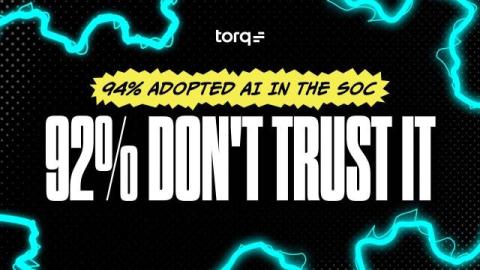
AI Security and Trust: Why SOC Teams Don't Trust AI

See how Torq harnesses AI in your SOC to detect, prioritize, and respond to threats faster. Request a Demo 92% of security leaders say something is actively reducing their trust in AI within the SOC. These aren’t skeptics, they’re people who have already adopted AI and believe in its ability to enhance security operations. We know from the 2026 AI SOC Leadership Report that AI is already widely adopted in the SOC, with 94% of organizations using it in some capacity.

AI SOC vs. white box AI: Why black boxes fail in the real world

There’s a growing wave of “AI SOC” startups promising autonomous everything. They’ll triage your alerts, investigate threats, and even run your playbooks. Push a button, let the machine handle the mess, and enjoy the magic. It sounds great until the moment something breaks. Then everyone, not just security, asks the same question: “What exactly did it do?” And that’s when these systems turn into a liability.

The $10 Million Question: Why Are 81% of Organizations Still Getting Breached?

We are living in a security paradox. Cybersecurity budgets are increasing, security stacks are growing more complex, and yet, the needle barely seems to move. According to the newly drafted 2026 Cyberthreat Defense Report (CDR), 81% of organizations experienced at least one successful cyberattack this past year. Even more concerning, the number of organizations suffering from six or more successful attacks is actually creeping up.

Privacy and Data Residency for AI Agents: What GDPR Requires That Static Controls Can't Show

The residency evidence GDPR and the EU AI Act now expect lives in the runtime trajectory of every AI agent execution, not in the deployment configuration. Your residency compliance dashboard — every workload in eu-west-3, sovereign cloud configured, SCCs signed — cannot produce it. Your AI agent’s last thousand inferences crossed an external border, on average, eight times each. The translation API routed through us-east-1 when the EU endpoint hit capacity.

How to Talk to Your Board About System Hardening

You know your servers need hardening. Getting leadership to prioritise, fund, and support the effort is the harder challenge. Here’s our experts’ best advice for how to talk to the C-suite and board about the need for automated server hardening. You already know the servers are drifting. Configurations change. Exceptions pile up. Standards slip over time. The hard part is not identifying the problem.

Why Editing IAM Policies Won't Fix Your AI Agent Identity Problem

Editing IAM policies cannot fix the most common architectural mistake in shipping AI agents on Kubernetes. It happens in thirty seconds: a platform engineer reuses an existing ServiceAccount with an IRSA annotation for Bedrock access because creating a new one takes thirty minutes plus a Terraform pull request. The new agent ships under the existing identity.