Six MCP Security Incidents Every Security Leader Should Know

In July 2025, an AI agent reviewed a support ticket, queried a production database, and leaked integration tokens directly to the attacker watching the thread. Months earlier, another AI followed "hidden instructions" in a public repository, exfiltrating private code into a visible pull request. In both cases, the AI wasn't broken; it simply obeyed the attacker instead of the developer.
Workshop: Analyzing Real Malware with Claude Code and LimaCharlie

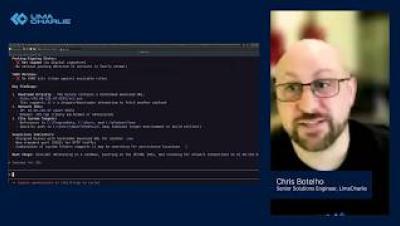
In this hands-on workshop we will analyze an unknown binary, quickly extract indicators, and determine the binary’s core functionality. We'll give Claude the LCRE (LimaCharlie Reverse Engineering) tool to accelerate analysis and interpretation by identifying configuration details, key behaviors, and any additional indicators useful for rule building. We'll use this information to craft detection rules for this sample.

Atlassian Team '26: The Conversations That Told Us Where Enterprise Identity Is Headed

We just got back from Atlassian Team '26 in Anaheim. Three days, thousands of attendees, and Atlassian's biggest push yet toward human-AI collaboration. The Founder Keynote set the tone, Rovo agents got smarter, and the Teamwork Collection took center stage. It was a packed, high-energy week. But the most interesting part of our three days wasn't on stage. It was at Booth.

What You Need to Know about the BWH Hotels Data Breach

BWH Hotel Group is one of the world's largest hotel networks, operating more than 4,000 hotels in over 100 countries. The company evolved from Best Western and today manages a multi-brand portfolio spanning budget to luxury hospitality. BWH Hotels' portfolio includes prominent brands such as Best Western Hotels & Resorts, WorldHotels, and Sure Hotels, serving millions of guests annually across approximately 4,300 hotels that generate more than $8.5 billion in annual revenue.

Does the rise of AI mean human-led SOCs are obsolete? With Dr. Adeel Shaikh Muhammad [322]

Dr. Adeel Shaikh Muhammad, a cybersecurity strategist and global speaker with over 16 years of experience across information security, networks, and systems. Adeel brings a practical perspective on how organizations can adapt to evolving cyber threats and the growing role of AI in cybersecurity.

13 Best DDoS Protection Software in the Market 2026

A DDoS attack costs businesses an average of $6,130 per minute. Beyond service disruption, these attacks often create operational pressure that exposes login systems, APIs, and payment workflows to additional threats such as credential stuffing and account takeover attempts while security teams work to restore availability.

DDoS Protection for SMBs: Always-On Defense Without the Overhead

SMBs absorbed approximately 894 million attacks in 2025, a 71% year-over-year increase — and DDoS drove 85% of that volume, nearly three times the enterprise rate. API DDoS on SMB platforms surged 1,122% in a single year, according to the Indusface State of Application Security 2026 report. With most SMB security operations run by teams of fewer than five people managing both infrastructure and security simultaneously, cybercriminals increasingly view smaller businesses as soft targets.

TEFCA compliance for digital health companies: a guide to identity proofing

In 1996, the US signed the Health Insurance Portability and Accountability Act (HIPAA) into law. One of the government’s chief goals was to safeguard sensitive patient data and protected health information (PHI) from unauthorized disclosure. While these protections were critical, HIPAA compliance requirements (alongside an already-fragmented electronic health record systems) have led to ongoing data silos across healthcare.

Network modernization for a secure enterprise

Relying on legacy hardware for modern business is like trying to run a high-speed bullet train on old wooden tracks. The train has immense potential, but the underlying foundation simply can’t support the speed, capacity, or safety required for the journey. As companies migrate to the cloud and adopt artificial intelligence, their networks must evolve. Outdated systems create bottlenecks that drain resources and expose sensitive data to modern threats.