Security | Threat Detection | Cyberattacks | DevSecOps | Compliance

Building a Shadow IT Policy: What CEOs, CTOs, and CISOs Need to Know

The problem with shadow IT isn’t really the need for new tools, it’s the fact that people use them without IT security teams knowing. This usually happens because they perceive security policies as restrictive and antagonistic toward their productivity. In this way, Shadow IT is a process issue—not a software issue. Hidden risk is increasingly challenging cybersecurity leaders as digital supply chains grow and more apps are added to the network.

Top 9 Cyber Risk Scenarios That Can Lead to Financial Loss in 2024

Pursuing a cybersecurity initiative takes more than a simple decision made by an organization’s chief information security officer (CISO). It requires resources, time, and, most crucially, buy-in from an organization’s key stakeholders, such as C-suite executives and board members. But trying to persuade the budget approvers while speaking in the technical language of cybersecurity can be off-putting. ‍

Cyber Exposure Management Meets the New SEC Reporting Requirements

The recent SEC breach disclosure rules place enormous pressure on CISOs. The new SEC disclosure requirements for public companies require companies to report annually on their cybersecurity risk management and governance efforts and publicly announce cybersecurity incidents that prove "material." Determining materiality may be one of organizations' most prominent challenges with the new rules. What exactly is a material cybersecurity incident?

How To Calculate Cybersecurity ROI and Communicate It to Executives

Organizational leaders have generally viewed cybersecurity as a costly yet essential business function and recognize that Chief Information Security Officers (CISOs) and other cyber leaders make strategic decisions to safeguard the company's digital assets. Still, until recently, these higher-level executives have never sought to make sense of the technical cyber activities in a broader business context, believing their value to be too complex to discern. ‍

Introducing the Cyber Resilience Scorecard

This week at the World Economic Forum Annual Meeting, SecurityScorecard published the first Cyber Resilience Scorecard, offering leaders and decision-makers a comprehensive and global view of global cyber risk. SecurityScorecard identified a strong correlation between a country’s cyber risk exposure and GDP, which underscores that a nation’s economic prosperity is deeply intertwined with its ability to navigate the complex landscape of cyber threats.

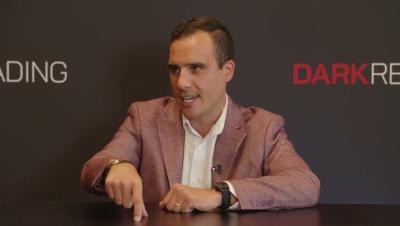
The Security Performance Management Evolution: Interview with Bitsight's Greg Kesen & Dark Reading

In this Dark Reading News Desk segment, Bitsight's Gregory Keshian discusses external attack surface management and security performance management. Greg reviews how the emerging discipline of security performance management (SPM) can better secure a company's attack surface. He offers guidance for how to mitigate problems and enumerates the major catalysts affecting attack surfaces, and how governance frameworks can be incorporated to ensure organizational compliance with state and federal laws.

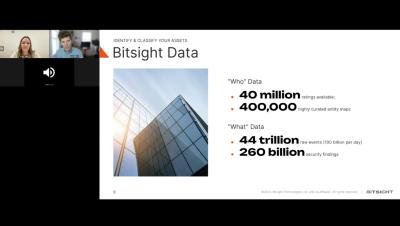
Identifying Blind Spots Through External Attack Surface Management

Did you know that 69% of organizations have experienced some type of cyber attack in which the attack itself started through the exploit of an unknown, unmanaged, or poorly managed internet-facing asset? Understanding the scope of your organization’s external attack surface is essential. You need to continuously manage your digital footprint to know where risks exist and how to prioritize vulnerable areas. Gain visibility into what an attacker sees and take informed action to reduce exposure and empower your organization’s growth and success.