QR code phishing accelerates as tactics evolve, LockBit 3.0 rebrands as Babuk Locker 2.0 ransomware, and Qilin affiliates target the downstream customers of an MSP.
CrowdStrike has won the 2025 Google Cloud Security Partner of the Year Award for Workload Security, recognizing our leadership in securing cloud environments at scale. Announced at Google Cloud Next 2025, the award highlights our commitment to joint innovation and delivering best-in-class protection for Google Cloud customers. As part of this growing partnership, we also introduced new CrowdStrike Falcon Cloud Security enhancements purpose-built for Google Cloud environments.
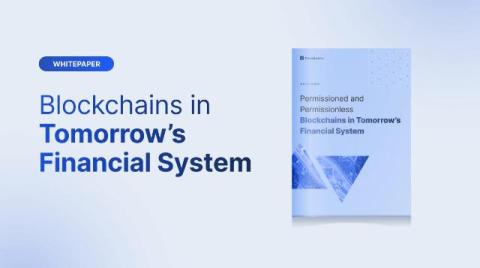
The rise of blockchain has fundamentally reshaped the financial ecosystem. Since Bitcoin’s genesis in 2009, permissionless blockchains have introduced an open, decentralized model for transacting value—fueling everything from DeFi to NFTs. Meanwhile, traditional financial institutions (FIs), drawn to the benefits of blockchain yet cautious of its risks, have leaned into permissioned systems that offer control, privacy, and compliance.
Managing an enterprise-level Active Directory (AD) means enterprise-grade volumes of identity accounts. Naturally, operations at this scale come with high complexity and call for intensive resources to maintain control. Manual errors can creep in as the business expands, leading to increased cybersecurity risks and vulnerabilities.
Starting today, Egnyte is available through the AWS Marketplace! Our partnership with AWS makes it easier to streamline procurement processes and maximize your technology investments. Read on to discover how our collaboration with AWS simplifies the integration of Egnyte into your existing tech stack, helping you unlock more value from your investment.
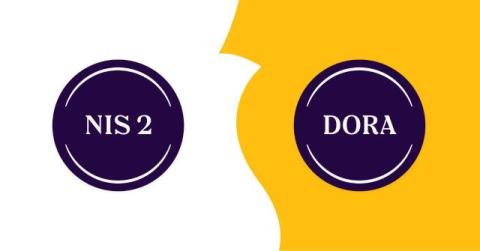
The Digital Operational Resilience Act (DORA) and the Revised Network and Information Systems (NIS 2) are two of the latest EU cybersecurity regulations designed to fortify the security posture and cyber resilience of in-scope entities. Both regulations share the same general purpose of increasing their respective sectors' overall transparency and security. Still, their approaches to this goal vary in several key aspects you’ll learn about in this guide.
In our first blog post, “Sysdig Secure-Google Chronicle integration – Why, what, and how“, we introduced the idea of connecting both platforms, highlighting their complementary strengths and providing a high-level overview. Now, we’re taking it a step further—moving beyond theory to focus on practical, real-world applications.
MITRE ATT&CK has become the go-to knowledge base for understanding how attackers operate since 2013. The framework’s 12 tactical categories map out attack stages from original access to final impact. Security teams can spot and block threats at multiple points before any damage occurs. This piece shows how companies can utilize MITRE ATT&CK’s framework to boost their EDR.
Agentic AI is transforming business. Organizations are increasingly integrating AI agents into core business systems and processes, using them as intermediaries between users and these internal systems. As a result, these organizations are improving efficiency, automating routine tasks, and driving innovation. But these benefits come at a cost. AI agents rely on APIs to access data and functionality from underlying systems. Without APIs, AI agents are useless.
Patrick Orzechowski (also known as “PO”) is Torq’s Field CISO, bringing his years of experience and expertise as a SOC leader to our customers. PO is a seasoned security veteran with a deep understanding of the modern security landscape. You can find him talking to SOC leaders and CISOs from major brands at cybersecurity events around the world.