Security | Threat Detection | Cyberattacks | DevSecOps | Compliance

The Role of Artificial Intelligence in Zero Trust Cybersecurity Frameworks

Artificial intelligence (AI) is no longer an experimental capability in cybersecurity; it is foundational to modern security operations. Organizations are operating in environments defined by cloud-first infrastructure, remote and hybrid workforces, SaaS sprawl, and identity-centric attack patterns. At the same time, threat actors increasingly rely on automation and AI to accelerate reconnaissance, credential abuse, and post-compromise activity.


How to build secure agent swarms that power production-grade autonomous systems

If one autonomous agent is useful, it is natural to ask whether many agents working together could be dramatically more effective. Over the last few weeks, the AI community has been testing this idea in practice by running large numbers of agents in coordinated swarms. The early results are clear: swarms can be far more capable than individual agents, but only under the right conditions.

Security Control Management: The New Mandate for Risk-Driven Security

Article updated and refreshed February 3rd, 2026. Because the tools you’ve deployed aren’t the same as the ones you’re using. Security teams today aren’t short on tools. Most environments are packed with security controls—spanning email, identity, network, endpoint, and cloud. But despite this abundance, risk remains stubbornly high. Attacks continue to land. Exposure persists. The problem isn’t the absence of controls. It’s the lack of control over the controls.

Compensating Controls: The Unsung Heroes of Cyber Resilience

Article updated and refreshed February 3rd, 2026. When ideal controls aren’t possible, intentional alternatives help reduce exposure. Most security teams know what the “right” controls look like on paper.But real-world environments rarely match the blueprint. Between legacy systems,limited staffing, and overlapping tools, the gap between what’s ideal and what’s feasible is often wide. That’s where compensating controls come in. They aren’t shortcuts.

Modernizing Mission-Critical Networks Through Accurate, Non-Intrusive Surveys

Modern network surveys provide a structured, repeatable way to uncover the true state of complex environments without intrusive installs or prolonged approvals. This blog explains how Forward Enterprise enables fast, accurate baselining and why understanding actual network behavior is foundational to modernization and mission assurance.

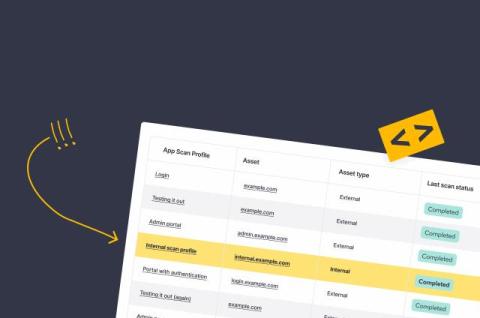
Introducing Detectify Internal Scanning for internal scanning behind the firewall

Detectify Internal Scanning is an internal vulnerability scanning solution that brings Detectify’s proprietary crawling and fuzzing engine behind your firewall. Built for AppSec and DevOps teams, it enables authenticated testing of internal applications, admin panels, staging environments, and microservices, all from a single, unified platform. Teams can now monitor both internal and external vulnerabilities side by side, without slowing down release cycles.

Introducing Aikido Package Health: a Better Way to Trust Your Dependencies

Aikido Package Health surfaces the true health of an open source package with a single score. It helps devs understand stability, maintenance quality, and supply-chain risk before installing a dependency. Aikido Package Health is a public service that assigns a clear Health Score to open source packages. It gives you an honest signal about which dependencies are well-maintained and safe to adopt, and which ones might need extra scrutiny before you pull them into your project. The goal is simple.

CVE-2026-25253: OpenClaw Bug Enables One-Click Remote Code Execution via Malicious Link

CVE-2026-25253 is a high-severity vulnerability (CVSS 8.8) in OpenClaw (formerly Clawdbot/Moltbot), an open-source AI agent framework. It allows attackers to exfiltrate authentication tokens via a crafted URL, leading to full gateway compromise and remote code execution (RCE) with one click. Disclosed in early February 2026, it affects versions before 2026.1.29.

AI agents are forcing a reckoning with identity and control

Most organizations never planned for AI to start making real decisions. They started with simple helpers. An agent answered basic questions or generated small automations so teams could avoid opening another IT ticket. It felt harmless. But as these agents become more capable and more autonomous, they begin operating across systems at machine speed. They connect tools, provision access, and trigger chained actions long after the original request.

DevSecOps Tools for Continuous Security Integration

If you’re an engineering manager in 2026, it’s almost certain you’re already exploring DevSecOps tools… by necessity as much as by choice. The reasons are clear: security is no longer a side concern or a tick-box for regulated industries. Even non-regulated businesses now face rigorous customer security questionnaires, growing SOC 2 and supply chain requirements, and persistent threats (especially related to AI-generated code) that make security non-negotiable.