Security | Threat Detection | Cyberattacks | DevSecOps | Compliance

Intelligent workflow automation: Where automation stops and intelligence starts

Automation works well until a step needs judgment, like an alert that needs context or an exception that doesn't match any rule. Those judgment steps are where the chain breaks, and where teams lose the capacity automation was supposed to give back. Intelligent workflow automation closes that gap. It orchestrates business processes across deterministic automation, AI for triage and decisions, and human-in-the-loop checkpoints in one workflow, so the ambiguous, judgment-driven steps don't break the chain.

Measuring AI-Enabled Success: 3 KPIs Leaders Should Track

AI represents a fundamental shift in how organizations work and innovate. It demands an equally fundamental shift in how technology leaders approach governance. Forward-looking leaders are moving beyond traditional gatekeeping by creating "paved roads": secure, pre-approved pathways that embed security controls, automated data protections, and real-time monitoring directly into AI workflows so teams can innovate rapidly within safe boundaries.

Securing AI agents: Why guardrail placement is a key design decision

When teams start building AI agents, especially with managed systems like Amazon Bedrock, they often wonder whether simply enabling guardrails is enough to secure their agents. A framework like Amazon Bedrock Guardrails provides a solid foundation for content filtering and policy enforcement, but having guardrails in place is only part of the equation.

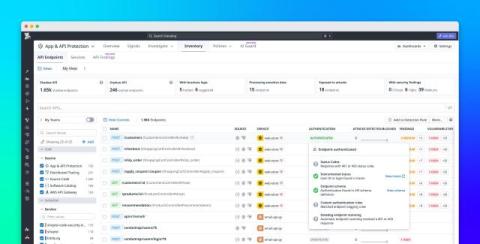
Improve API authentication detection with Datadog

Many organizations have hundreds or thousands of API endpoints across their services, each of which handles authentication differently. For example, one service might rely on standard headers like Authorization: Bearer, while another uses an API key, and a third uses a custom JSON Web Token header with mechanisms or naming conventions specific to the team that built it.

Runtime Observability for AI Agents: What to Instrument and Why

Every guide to AI agent observability tells you what to capture — prompts, tool calls, token usage, traces, syscalls. Almost none address which of those signal sources you can still trust when the agent itself is part of the threat model. That distinction is the entire difference between observability that helps your SRE team debug a slow reasoning chain and observability that helps your security team investigate a breach.

Tranche 2 Australia: Who's affected and how to comply

On 1 July 2026, Australia's Tranche 2 reforms take effect. If you're a lawyer, accountant, real estate agent, conveyancer, precious metals dealer, or trust and company service provider, this deadline likely applies to you. Tranche 2 extends Australia's AML/CTF obligations to approximately 100,000 businesses that were previously unregulated.

Understanding continuous threat exposure management (CTEM)

Continuous threat exposure management, or CTEM, is a five-stage program framework for continuously reducing real-world security exposure. It builds on vulnerability scanning by adding risk-informed prioritization, validation of exposure conditions and control effectiveness, and cross-team mobilization to drive remediation.

Autonomous AI vs Zero-Day Attacks: The New Cybersecurity Shift

For decades, finding a zero-day flaw followed a predictable script: a highly skilled human researcher spent weeks staring at source code, digging for edge cases, and manually stitching together an exploit. In April 2026, Anthropic flipped that script by announcing Claude Mythos. This frontier model didn’t just mark an incremental upgrade; it introduced autonomous, machine-speed vulnerability hunting.