Security | Threat Detection | Cyberattacks | DevSecOps | Compliance

What MDM can't protect on developer machines (and what to do about it)

Mobile Device Management (MDM) is a type of software used by organizations to secure, manage, and monitor their employees' mobile devices. Tools like Jamf, Kandji, and Microsoft Intune give IT teams visibility and control over every sanctioned application across the fleet. For compliance frameworks like SOC 2 or ISO 27001, MDM is often a core component of how you demonstrate device control and ensure data security. If your MDM is deployed, congratulations, you've solved 2012's BYOD security challenge.

How State and County Law Enforcement Use AccessPatrol to Meet CJIS and NIST 800-53 Requirements

I spent nearly a decade in the U.S. Federal Government, including roles at the White House, the U.S. Department of Commerce, and the U.S. Senate. I later advised public sector clients on technology and strategic growth problems at Accenture. The same pattern showed up everywhere I went. Agencies invest in sophisticated network defenses.

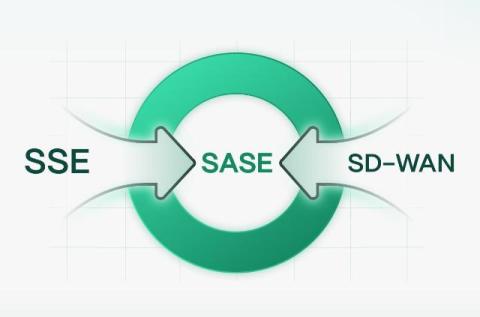
What Consistent Leadership Across SSE, SD-WAN, and SASE Signals

GigaOm’s latest analysis highlights a clear shift in the market. As they note, “The standalone Secure Service Edge (SSE) market has largely disappeared, with leading vendors now offering complete SASE solutions that converge software-defined wide-area network (SD-WAN) and SSE into single-vendor platforms. Organizations increasingly favor this consolidated approach to reduce operational complexity and improve visibility.”

Remote Access That Works Behind NAT, CGNAT, and Uncontrolled Firewalls

A device in your fleet encounters an issue. You try to SSH in only to discover that the IP changed overnight, the customer's firewall blocks inbound connections, and the VPN they set up six months ago stopped working when the device switched from Wi-Fi to cellular. The next several hours disappear into a Slack thread with the customer's IT team trying to get a port opened. Every engineer who has shipped hardware into a customer's environment has a version of this story.

An HR Leader's Guide to Insider Risk Management

HR teams manage every stage of the employee lifecycle, from hiring and onboarding to performance management and offboarding. Security teams manage data access, behavioral monitoring, and incident response. Insider risk lives at the intersection of both. When HR and security operate independently, the gaps between them are exactly where data loss happens, and the moments of highest exposure are almost always HR events, such as a resignation submitted, a role change processed, a termination decision made.

Persona is one of the first verification vendors to accept California's mobile driver's license

During identity verification, organizations typically have to decide between increasing security controls and improving user conversion. Tighter checks mean more abandonment, and smoother flows mean more risk. Most verification flow design is an exercise in finding the right tradeoff. Mobile driver's licenses (mDLs) are different. Because an mDL is cryptographically signed by the issuing DMV and presented directly from a user's device, it's both faster to verify and harder to fake.

How Persona supports age verification and privacy online

Addressing these potentially competing priorities is difficult with today’s technology, and it's an active area of work for government agencies and private organizations alike. But we think there’s a potential path forward if regulations and organizations limit what you have to share, who you have to share data with, and how your data can be used.

The Trust Layer Autonomous Networking Was Missing Is Here

It has been a week since we announced Forward Predict at our Innovation Day broadcast, and I'm still taking it in. Since the inception of networking, the industry has been working without a safety net, making changes in the production network without knowing their impact beforehand. The result has been outages and security breaches. This wasn’t a lack of diligence, it was because there was no way to know, with certainty, what a change would do to the production network before it was pushed.

The Collapse of Symmetry: Why Periodic Pentesting is Strategic Suicide Against Algorithmic Warfare

The cybersecurity industry is sleepwalking. We are still captivated by the romanticized image of the hacker: a human in a hoodie manually typing code to breach a network. Wake up to the reality of 2026. The modern adversary is no longer human. It is algorithmic.