Security | Threat Detection | Cyberattacks | DevSecOps | Compliance

Third Party Supplier Security: Are Your Vendors Safe?

Your third party suppliers probably aren’t as secure as you think they are. SecurityScorecard’s 2025 Global Third Party Breach Report found that at least 35.5% of all data breaches in 2024 originated from third party compromises. That’s not a minor risk you can ignore. The numbers tell a stark story. But here’s what most organisations miss: the real figure is likely higher since many breaches aren’t disclosed or are mistakenly reported as internal incidents.


The Monetary Authority of Singapore (MAS) on AI Risk Governance

‍ ‍The Monetary Authority of Singapore's (MAS) Consultation Paper on Guidelines on Artificial Intelligence Risk Management, released in November 2025, dramatically altered how AI is positioned within the country’s financial supervision. The document states that the proposed Guidelines "set out MAS' supervisory expectations relating to AI risk management in financial institutions (FIs)" (p.3).

What's New With Keeper | February 2026

The Keeper Security Government Cloud (KSGC) platform has been authorized at the FedRAMP High baseline, enabling federal civilian agencies to protect high-impact unclassified data as defined under FIPS 199 and FedRAMP High baselines. The “High Impact” designation applies to systems where unauthorized access or disruption could cause severe or catastrophic harm to agency operations, assets or individuals.

Anomaly Detection with Machine Learning to Improve Security

Being a security analyst can feel like being trapped in a Where’s Waldo book. You can find yourself staring at a data stream looking for something that “isn’t like the others.” However, as your organization collects and correlates more data from the environment, finding the Waldo can feel overwhelming. In a modern IT environment, organizations have hundreds or thousands of devices, users, and data points that they need to correlate so they can identify normal network activity.

Passing SOC 2 Without the Overhead: How Zero Standing Privileges Simplifies Compliance

Getting ready for a SOC 2 audit can feel like an endless checklist. You already have tools collecting logs, provisioning users, and pulling reports from your systems, yet proving compliance still feels harder than it should be. The biggest pain in SOC 2 is not collecting data. It is managing access in a way that continuously aligns with your own policies.

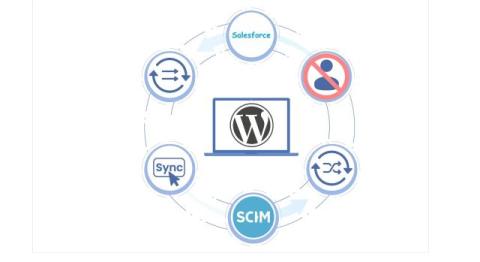
User Provisioning and Data Synchronization - User Synchronization for WordPress

With the growth of any business or organization, the importance of data accuracy, consistency, and privacy is rising. Things that may seem like a minor data error or glitch can have a major negative impact on sales, decision-making, and customer retention.

AWS ECR Scanning: The Practical Guide to Securing Your Containers

If you operate containers on AWS you’re likely familiar with how vulnerabilities can accumulate. The majority of container images currently include least one critical security flaw. Frequently hidden within a base image or an overlooked dependency. This makes enhancing your AWS container security essential. It’s the method to prevent problems such, as data leaks, privilege abuse and supply-chain threats.

Defending against deepfake cyberattacks: Why trust is the new security perimeter

Deepfake technology is now a legitimate enterprise level threat. What started as a potentially disturbing AI capability has rapidly become a powerful tool for cybercriminals and one that exploits the most fundamental element of business communication: trust. A new report from Info‑Tech Research Group, Defend Against Deepfake Cyberattacks, breaks down how to understand and assess the risk deepfakes pose to organizations of all sizes.

Report: One in Ten UK Companies Wouldn't Survive a Major Cyberattack

A new survey by Vodafone Business found that more than 10% of companies in the UK would likely go out of business if they were hit by a major cyber incident, such as a ransomware attack, Infosecurity Magazine reports. Additionally, 71% of business leaders believe at least one of their employees would fall for a convincing phishing attack, and fewer than half (45%) of organizations have ensured that all of their employees have received basic cyber awareness training.

What Security Teams Need to Know About OpenClaw, the AI Super Agent

OpenClaw, an open-source AI agent previously known as Clawdbot and Moltbot, is a powerful personal assistant that can connect to LLMs, integrate with external APIs, and autonomously execute an array of tasks like sending email or controlling browsers. While OpenClaw carries the promise of AI-driven productivity, it also presents growing security concerns. OpenClaw is installed on local machines or dedicated servers.