Security | Threat Detection | Cyberattacks | DevSecOps | Compliance

Tech For Good: How Strategic IT Empowers Nonprofit Impact

You didn't get into nonprofit work to troubleshoot software or manage server updates. You got in to make a difference. But here's the reality: the technology your organization uses every day either helps you do that or quietly gets in the way. Strategic IT isn't just for corporations with big budgets. There are affordable IT services for nonprofits that can give your team the same kind of reliable, secure, and efficient infrastructure that larger organizations depend on, without draining your mission-critical resources.

Cybersecurity Tips for Modern Entertainment: How to Secure Your Home IPTV Network

Home entertainment has evolved into something far more complex than just flipping channels. Today, every smart TV, streaming stick, and IPTV app sits on the same home network that also carries personal data, passwords, and sometimes even payment details. This interconnected world feels smooth, almost invisible, but underneath, it's like an open highway if not protected properly. Many users searching for a reliable experience also start looking for ways to ensure secure IPTV streaming, because entertainment today is not only about access; it's about safety too.

The Four Environments Where SaaS-Only SIEM Fails

Picture a cybersecurity team responsible for protecting a classified military installation in a remote operational theater. No internet connection. No cloud services. Classified and unclassified networks running on physically separate infrastructure. Their security information and event management system has to detect threats, correlate events, and generate alerts with zero external connectivity, for the entire deployment. That is not a compliance checkbox. It is a physics problem.

Agentic workflows: What they are and how enterprise teams govern them

Security and IT teams know the pattern: work spans dozens of tools that don't talk to each other, and people closest to the problem spend more time stitching together information than acting on it. Whether the job is provisioning access, triaging an anomaly, or closing out an incident, the reality is fragmented handoffs and brittle scripts. The data backs this up.

CrowdStrike and Zscaler Bring Continuous Identity to Zero Trust Access

Modern adversaries are accelerating attacks across identities, endpoints, cloud environments, and SaaS applications, often moving faster than security teams can respond. Identity has become a primary attack vector as attackers leverage credential abuse to evade detection and expand their foothold. Stopping today’s threats requires visibility and context across every domain to accurately assess risk before adversaries can move laterally.

How link analysis unravels identity mule rings

Identity verification helps prevent fraud by requiring would-be fraudsters to verify that they are real people and who they say they are. But what about a user who opens an account with their legitimate ID and selfie and then hands the keys to a bad actor? That’s exactly what happens with identity muling, and this type of second-party fraud can be difficult to detect.

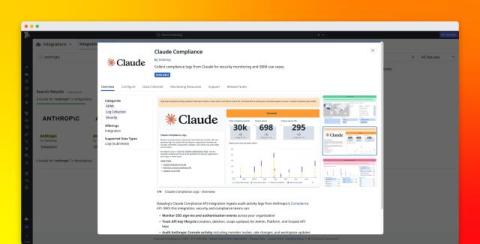
Monitor Claude Enterprise activity with Datadog Cloud SIEM

As Claude adoption expands across enterprises and workflows, security and compliance teams need to understand who is using Claude Enterprise, how it is accessed, and how it is administered and configured across the organization. The Claude Compliance API gives organizations access to valuable activity data that supports security monitoring, investigations, and governance initiatives.

Zenity Labs: The Bleeding Edge

At Zenity, we like to say we don't only exist on the bleeding edge; we are the bleeding edge. It's a defensible claim. Zenity Labs consists of multiple teams focused on various technical disciplines within the security industry, and while the Labs moniker sits loosely over the group, the work it produces tells a unified story around AI Agent security.

How to Create a Disaster Recovery Checklist

Disasters are no longer defined simply by acts of nature. Nowadays, a localized electrical failure can crash global communications and bring online transactions to a sudden halt. Modern businesses rely on worldwide networks, web applications, and 24x7x365 customer call centers, making continuous operation an absolute necessity. When an unplanned outage strikes, your organization needs a reliable way to maintain alternative processes and keep IT systems running smoothly.

Everyone Is Buying AI Guardrails. But Agents Have the Keys to the Car.

The first wave of AI security looked a lot like a WAF for LLMs: inspect the prompt, filter the output, block the obvious bad patterns. That was useful. It still is. But it was built for systems that mostly talked. Agents are different. They use tools, call APIs, access data, and change things. The confusion I keep seeing is simple: many teams think securing the model means securing the agent. It does not.