Introducing the leading AI-native SecOps platform built for both managed and self-service SOCs - delivering autonomous speed, precision, and control at scale.
For years, vulnerability management has been one of the cornerstones of cybersecurity. Organizations scanned their environments, identified weaknesses, prioritized remediation, and repeated the process regularly. That approach still matters. But today's threat landscape has fundamentally changed. Organizations now operate across cloud environments, remote workforces, SaaS applications, identities, endpoints, and increasingly complex networks.
Today, we’re launching BlueVoyant AI. In my first months as CEO, I’ve had the chance to meet with many of you. What struck me most is the scope and importance of what you’re protecting, and how seriously you carry that responsibility. What also came through clearly is that your vision for the future of security aligns with ours.
Your stack has a SAST. A DAST. An SCA. A SIEM. And probably seven more tools your developers have quietly stopped reading alerts from. None of them were built for mobile. That's not a criticism. It's a fact about what those tools were designed to do. They were built for web applications, network infrastructure, and cloud environments, which were the priorities of a different era. Mobile apps came later. And the security tooling never fully caught up.
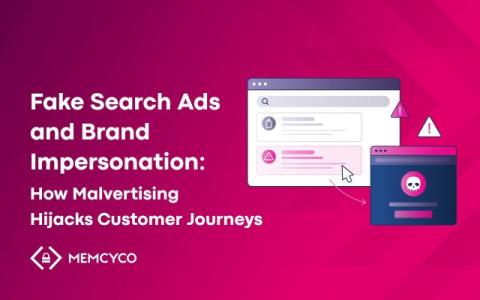
Fake search ads are paid search placements that impersonate trusted brands, services, or login destinations to redirect users into fraudulent journeys. For enterprises, the risk is not only that attackers buy visibility. It is that they intercept customers at the exact moment those customers are trying to reach the real brand. That makes fake search ads different from many other phishing entry points. The user is not responding to a suspicious message.
OMB M-26-14 introduces a significant change in how federal agencies approach logging, monitoring, and incident response. Rather than emphasizing volume and retention of log data, the memo centers on how effectively agencies can use telemetry to support detection, investigation, and response across the full threat lifecycle. For cybersecurity leaders, the implication is clear: logging is now closely tied to operational performance.
When you share a video online, sometimes you only want a few people to view it. Whether it's for a client, work, or personal reasons, to share private videos, you need to be aware of privacy settings, encryption, access controls, and what are the best ways to share a large video file securely and privately. Throughout this article, we will offer you tips and step-by-step guidelines on how to share private videos online.
Artificial intelligence tools have completely revolutionized the way we work, boosting productivity to heights we couldn’t have imagined just a few years ago. But the upside comes with a high-stakes catch: every time an employee pastes proprietary code, financial records, or sensitive customer data into a public AI prompt, your company is at risk. As Shadow AI adoption skyrockets, implementing robust data leakage prevention is no longer an IT checklist item — it’s a business imperative.
A few weeks ago, we wrote about Project Glasswing and what we observed when we pointed cyber frontier models at our own code. Since then, we’ve seen that the part of the post that has resonated most deeply is the argument that the architecture around the vulnerability matters more than the speed of the patch.
The recent wave of announcements surrounding Claude Mythos and Project Glasswing has certainly filled our feeds. While these developments are technically interesting, the real story for me lately has been what they reveal about where the cybersecurity market is heading and how quickly that evolution is reshaping the risk conversation.