Security | Threat Detection | Cyberattacks | DevSecOps | Compliance

Report: AI-Enabled Social Engineering Attacks Are on the Rise

Threat actors are increasingly using AI-enabled social engineering to get around technical security measures, according to a new report from Visa. Social engineering attacks were behind the largest number of losses in the second half of last year. “From July to December 2025, Visa identified nearly $1 billion in scam-related activity, making scams the single largest category of consumer payment fraud,” Visa says.
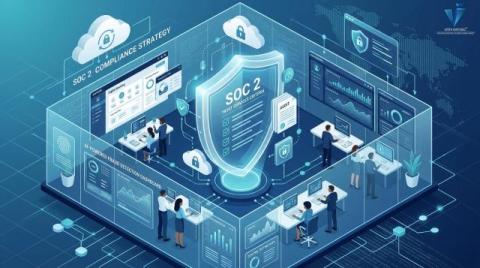
SOC 2 Type 2 Audit Requirements for Fintech Companies

Rate this post Last Updated on June 8, 2026 by Narendra Sahoo Contents hide Why Fintech Companies Can No Longer Afford to Skip SOC 2 Type 2 What Is a SOC 2 Type 2 Report? (And Why Type 1 Is Rarely Enough) The Five AICPA Trust Services Criteria — Applied to Fintech Core SOC 2 Type 2 Audit Requirements for Fintech Companies The Practical SOC 2 Type 2 Audit Checklist for Fintech Companies Reading Your Audit Report: The Four Auditor Opinions Explained Frequently Asked Questions.

Certificate lineage: the concept your tools already use but nobody named

The word “certificate” means too many different things. When someone says “the certificate for example.com,” they might mean the public key the CA signed. They might mean the key-pair sitting on the filesystem. They might mean the signature that expires in 47 days. Or they might mean all the things together, that you’ve been renewing for the last 10 years. That last one doesn’t have a name in any PKI standard. And it should.

Unlock Compliance Management Solutions for 2026

You can usually tell when a compliance program is still running on audit season logic. Three weeks before an assessment, Slack fills with evidence requests. Security exports screenshots from cloud consoles. IT pulls user lists from IAM. HR scrambles to prove termination workflows. Someone opens the spreadsheet nobody has touched since the last audit and starts guessing which controls still map to which systems.

Top tools for Confluence backup

Confluence is often used to store important knowledge inside an organization: runbooks, technical documentation, project plans, onboarding materials and incident notes along with internal procedures. When this data is deleted, overwritten, corrupted or simply unavailable, teams can lose the information needed to keep work processes moving forward.

What is AI Policy Enforcement and How Do You Implement It?

Here’s the reality that most security teams are already living: Over 80% of employees are using unapproved AI tools at work, and nearly half are actively hiding them from IT. The question facing every organization is no longer whether to adopt artificial intelligence — it’s how to secure the sensitive data flowing into it every single day. This is the governance gap.

How Airlines are Scaling Disruption Management with AI and Human Collaboration

A single weather event. A ground stop at a major hub. An unexpected crew shortage. Within hours, what began as a routine operating day can spiral into thousands of stranded passengers, hundreds of cascading cancellations, and a contact centre fielding ten times its normal volume, all at once. Airline disruption management is unlike almost any other customer experience challenge because it escalates at an unexpected rate. And when it does, every second of delay in reaching a passenger compounds frustration, erodes loyalty, and multiplies the cost of recovery.

What Is 'Business Identity Theft'? Corporate Security and Vendor Risk Management

Business identity theft occurs when criminals hijack a company's commercial credentials-such as its tax ID or registration details-to open fraudulent lines of credit, intercept vendor payments, or execute supply chain attacks. You do not just lose money. You lose your operational integrity.

The Best CRMs in Higher Education

Recruiting and retaining students has gotten harder. Enrollment competition is up, applicants expect faster and more personal communication, and the systems many institutions inherited weren't built for any of it. That pressure is a big part of why colleges and universities have spent the past decade moving away from spreadsheets and general-purpose tools toward CRM platforms that can follow a student from first inquiry through enrollment and, increasingly, into alumni relations.