When an incident occurs — be it ransomware, a vulnerability exploit, or another kind of sophisticated attack — robust incident response can be the difference between quick remediation or costly, extended down time.
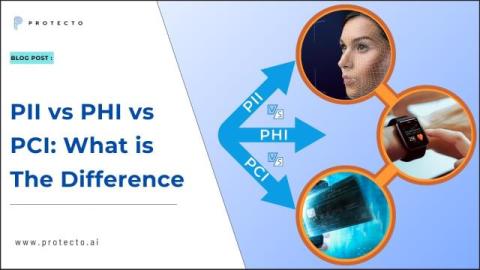
In this age of digital supremacy, keeping our data safe and respecting privacy are super important. As more and more people and businesses use online platforms, it’s crucial to understand what types of data need that extra layer of protection, especially when it comes to PII vs PHI vs PCI. Understanding the distinctions between PII (Personally Identifiable Information), PHI (Protected Health Information), and PCI (Payment Card Information) is crucial.
Striking the right balance between innovation using Artificial Intelligence (AI) and Large Language Models (LLMs) and data protection is essential. In this blog, we’ll explore critical strategies for ensuring AI and LLM data security, highlighting some trade-offs.
As cyber threats continue to grow more sophisticated, the demand for dynamic, scalable security solutions has led to the increasing adoption of Security Operations Center as a Service (SOC as a Service, or SOCaaS). The SOC as a Service model offers a significantly more cost-effective alternative for organizations without the resources to establish full-scale, in-house security operations centers (SOCs).
DevOps practices have significantly transformed the software industry, leading to faster release cycles and more streamlined workflows. The enduring presence of the DevOps model is undeniable, and its influence on modern development methodologies is profound. However, this accelerated pace introduces challenges, particularly regarding DevOps security.
Think of a cluttered desk, but on a digital scale. Businesses rely on hundreds of cloud-based, third-party Software-as-a-Service (SaaS) applications. Over a quarter (28%) of SME employees require 11 or more tools to manage the worker lifecycle. From the end user perspective, this isn’t a bad thing at all. Why not? SaaS applications are easy to activate, often coming with free editions or low-cost versions that accomplish a specialized task.
An organization is only as secure as its weakest link — and the software supply chain is most often where the weakest link is found. A supply chain attack is a sophisticated cyberattack where malicious actors compromise a service provider to gain unauthorized access to its end users. Since 2018, the number of organizations impacted by supply chain attacks has increased by 2,600%.
When building applications that ingest and analyze millions of data points per second, developers as a rule require good observability data on workload performance. That principle certainly holds true for us on the Cloud SIEM team, where delivering a highly reliable and responsive product to our customers is central to our day-to-day operations.