Security | Threat Detection | Cyberattacks | DevSecOps | Compliance

Establish a New Foundation by Rethinking Your File Server Strategy

In case you missed it, Egnyte recently presented a webinar focused on an ongoing yet potentially overlooked problem for many organizations—their file server strategy. Our discussion covered a ton of ground, but I thought it was important to recap some of the takeaways and recommended next steps here.

The Stryker Cyberattack: Why Endpoint and Mobile Device Monitoring Matter

Recent reports of a cyberattack targeting medical device manufacturer Stryker highlight a growing challenge for modern organizations: maintaining visibility across every device connected to their networks. The Michigan-based healthcare technology company reported a global network disruption affecting its Microsoft environment following a cyberattack.

Managed Detection and Response Solutions: Strengthening Security with LevelBlue MXDR

LevelBlue has developed a suite of managed detection and response solutions to help organizations maintain strong security as threat groups grow more sophisticated. LevelBlue’s Managed Extended Detection and Response (MXDR) with a Co-Managed Security Operations Center (SOC) combines MDR security technology with collaborative expertise to help organizations monitor, investigate, and respond to threats across their environments.

Proving Zero Trust in Practice: Continuous Validation for Segmentation and Lateral Movement Defense

SafeBreach Senior Product Marketing Manager Tova Dvorin explores the critical necessity of continuous validation in Zero Trust architectures, specifically focusing on the integration of SafeBreach and Akamai Guardicore. While microsegmentation is a foundational element in the defense against lateral movement and ransomware propagation, dynamic infrastructure and policy drift often create “blind spots” that compromise security posture.

Basic Authentication vs. Modern Authentication and How to Enable It in Office 365

According to a Verizon report, the majority of data breaches are made possible by compromised credentials, especially on email servers. Social engineering, credential phishing and brute force attacks are some of the methods used by malicious actors to steal credentials. To improve the security of Office logins and help prevent data breaches, Microsoft introduced the modern authentication method.

Why Soft Guardrails Get Us Hacked: The Case for Hard Boundaries in Agentic AI

One recurring theme in my research and writing on agentic AI security has been the distinction between soft guardrails and hard boundaries. As someone who serves on the Distinguished Review Board for the OWASP Agentic Top 10, and who spends every day thinking about how to secure agents across enterprise environments at Zenity, this distinction is not academic. It is potentially the single most important conceptual framework practitioners need to internalize right now.

The Scattered Spider Playbook: Why Airline Loyalty Accounts Are Prime Targets for ATO

Scattered Spider–style attacks increasingly target airline loyalty accounts, where stolen credentials can be used to hijack frequent flyer accounts and redeem miles for fraud. Investigations associated with the Scattered Spider ecosystem show how attackers manipulate impersonation campaigns, phishing infrastructure, and account recovery workflows to gain control of customer accounts. For airline security teams, the lesson is not limited to one threat group.

Scorched Earth: Wiper Attacks are the New Face of Cyber War

Sure, they would vastly prefer targeting organizations in the opponent’s supply chain (which is why new requirements like CMMC are absolutely crucial), but every organization that is affiliated with or operates in the adversary’s territory becomes a target no matter how large or small.

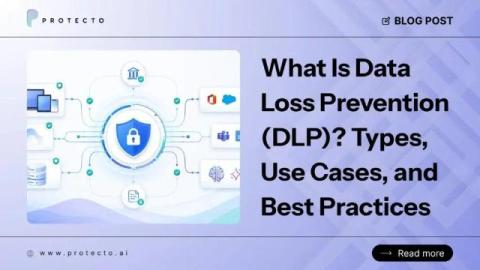
Q&A: Turning Data Visibility Into Faster Protection With A Leading Robotics Company

As organizations manage sensitive data across endpoints, cloud platforms, and a growing number of SaaS applications, having clear visibility into where data lives and how it moves has become increasingly important. For companies operating in highly sensitive and IP driven environments, the ability to understand data access and respond quickly to risk is essential.