Security | Threat Detection | Cyberattacks | DevSecOps | Compliance

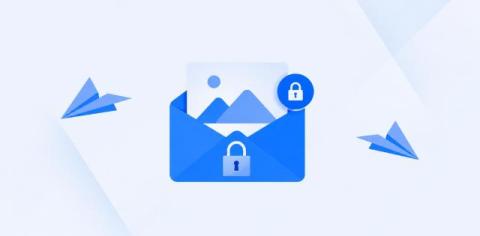
Received Someone Else's Confidential Email? Here's What To Do.

When we think about misdirected email, we often put ourselves in the shoes of the sender. After all, nobody wants to tell their manager that they might (however accidentally) be responsible for a data breach. But what you do when you’re on the other side of the inbox?

What You Need to Know about the Stryker Cyberattack

Stryker Corporation is a Fortune 500 medical technology company headquartered in Kalamazoo, Michigan. Founded in 1941, Stryker manufactures surgical equipment, orthopedic implants, neurotechnology, hospital beds, and robotic surgery systems. The company employs approximately 56,000 people globally and reported over $25 billion in revenue for 2025. Stryker's products reach more than 150 million patients annually across 61 countries.

Top 10 Customer Identity and Access Management (CIAM) Vendors of 2026

When someone registers for an online service or healthcare portal, logs into an eCommerce store, or uses a streaming platform, the first interaction usually involves identity and authentication. For businesses, this moment is critical because it connects security, customer experience, and trust.

Proactive Insider Risk Management: The Smartest Cybersecurity Investment for 2026

One reality that organizations must accept in 2026 is that insider risk can no longer be a secondary security concern. It is a material business risk with direct implications for governance, operational resilience, and enterprise value. Source: 2025 Cost of Insider Risks Global Report by Ponemon Institute.

What Triggers a FedRAMP Significant Change Request?

The power of FedRAMP comes from standardization. By setting a firm baseline and forcing cloud service providers to adhere to it if they want to work with the government, a certain mandatory minimum level of security is enforced. A key part of FedRAMP as a security standard is that it’s not a fire-and-forget system. Instead, it involves constant, active vigilance through a process called continuous monitoring.

Exploring Shopify Customer Accounts & Enhancing Security with miniOrange

Shopify's recent update introduces advanced extensibility features for Shopify customer accounts, significantly enhancing both Direct-to-Consumer (DTC) and Business-to-Business (B2B) customer accounts. This update allows for more seamless and customizable customer interactions, boosting satisfaction and operational efficiency for both types of customers. Shopify has revealed that developers can now access customer accounts using customer account UI extensions, which are currently in developer preview.

Okta integration with Shopify - Okta Shopify Single Sign-On (SSO)

Connect Okta & Shopify with any apps on the web using Okta Integration with Shopify with Okta as IDP. Enable secure SSO into Shopify Plus and Non-Plus stores, streamlining access for both customers and employees. Okta is a platform in the Identity-as-a-Service (IDaaS) category, meaning it allows you, your colleagues, or customers access to all other (company) software with a single set of login credentials.

Enable SSO into Shopify Admin & Add Unlimited Staff Members

Enable secure Single Sign-On (SSO) access to your Staff Members and add an unlimited number of staff members in Shopify Admin to manage your Shopify Store. You can completely own your Shopify Store by restricting your staff member’s access based on tags assigned to them. Login from multiple IDPs is also supported which will help in authenticating users from different IDPs for your Plus & Non-plus Shopify Store.

An AI Agent Didn't Hack McKinsey. Its Exposed APIs Did.

This week’s McKinsey incident should be a wake-up call for every enterprise moving fast to deploy AI. Not because AI itself is inherently insecure. But because too many organizations are still thinking about AI security at the model layer, while the real enterprise risk sits in the action layer: the APIs, MCP servers, internal services, and shadow integrations that AI agents can reach, invoke, and manipulate. That is the part most companies still do not see.