Security | Threat Detection | Cyberattacks | DevSecOps | Compliance

How to find and fix jQuery vulnerabilities

Using an outdated jQuery library can open up your web application to vulnerabilities. Read more to find out how to find and fix jQuery vulnerabilities. jQuery is among the oldest JavaScript libraries available online. It simplifies your coding and is used by countless websites. But there is an inherent danger that lies with outdated jQuery libraries: they are vulnerable to risks such as cross-site scripting.


Cybersecurity Is Necessary for Mission-Critical Energy Grids

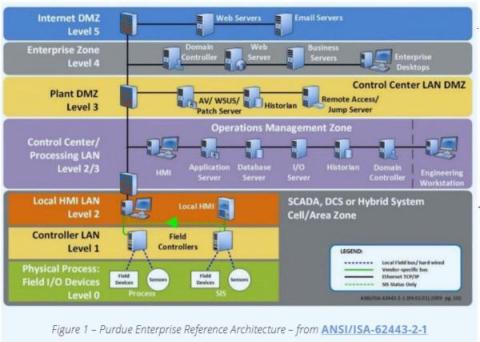
Today’s energy sector is undergoing massive change, especially as more utilities try to usher in clean or renewable energy alternatives like solar, geothermal, hydroelectric, and wind power. In addition to the clean energy transition, grid modernization is another major shift in the energy industry. The Industrial Internet of Things (IIoT) is expected to transform the energy grid and support modernization efforts.

How to protect organizations against Brute Force Attacks

A brute force attack is an attempt to reveal passwords and login credentials in order to gain access to network resources. These attacks are mainly done with the purpose of gaining unauthorized, and undetected access to compromise systems. Threat actors usually prefer this attack method since it is simple to carry out, and can cause significant damage. Once a person’s credentials are revealed, the attacker can log in, generally unnoticed.

Security Control Types for Attack Surface Reduction

Cybersecurity is an ever-present concern for businesses, particularly as the modern attack surface continuously expands and changes due to the shift to remote work in response to the COVID-19 pandemic, cloud adoption, and the growth of shadow IT, among other factors. Implementing the appropriate security control types for attack surface reduction is crucial for bolstering your company’s cybersecurity posture in the modern threat landscape.

Top Cheap Code Signing Certificate Providers 2023

With cyber-security becoming a prime concern of individual users and organizations, everyone prefers using legitimate software. If the system shows a warning about any application, users instantly act uninstalling it and finding an alternative. And it can happen with your software too, that system displays a warning at download or installation only. But, you can prevent it by utilizing a Code Signing Certificate, which gets issued by a Certificate Authority.

Royal Ransomware Deep Dive

The threat actor group behind Royal ransomware first appeared in January 2022, pulling together actors previously associated with Roy/Zeon, Conti and TrickBot malware. Originally known as “Zeon” before renaming themselves “Royal” in September 2022, they are not considered a ransomware-as-a-service (RaaS) operation because their coding/infrastructure are private and not made available to outside actors.

DLL Side-Loading: How to Combat Threat Actor Evasion Techniques

Threat actors constantly evolve their tactics and techniques to circumvent security solutions. Working at the cutting-edge of detection engineering, CrowdStrike rapidly tracks and observes these evolutions in tactics to deliver timely, effective detections that protect customers. In this blog, we explore DLL side-loading and learn how CrowdStrike has expanded protections with Advanced Memory Scanning.

Who's Knocking on the Door? An Overview of Authentication and MFA - And How It Can Uplevel Your Organization's Cyber

Authentication, at its core, is the act of verifying credentials. In the case of human beings, it’s as simple as answering the question, “Who are you, and how do I know for sure it’s you?” Authentication is something we’re constantly engaging with in everyday life.

Rubrik Brings Security at the Point of Data to Microsoft Azure Stack HCI

Operating in a cloud model means not only being able to access your data anywhere but that your infrastructure is flexible and scalable enough to accommodate demands that change from day to day or sometimes from moment to moment. This is easy enough to achieve in a public cloud, where resources can be made elastic and added and removed dynamically.