Security | Threat Detection | Cyberattacks | DevSecOps | Compliance

What Your Board Gets Wrong About AI Security

Editor's note: This article was originally published by Craig Riddell on LinkedIn. It has been republished here with the author's permission. Boards are giving AI security more airtime than ever. What they're not giving is the right framing. A year or two ago, AI was mostly a question of experimentation risk. Today, it's tied directly to revenue, customer experience, operational efficiency, and competitive advantage. The urgency is real, and it's translating into aggressive deployment timelines.

Prompt Analysis for AI Attack Detection: Four Signal Categories, Three Blind Spots, One Correlation Layer

At 2:47 PM on a Tuesday, a customer support agent receives a routine ticket asking about return policy edge cases. The agent retrieves a section from your internal policy wiki through RAG to formulate the response. Three weeks earlier, an attacker had planted a hidden instruction in that wiki page. Bedrock Guardrails scored the retrieved context at 0.04 — well within benign range.

MITRE ATLAS for AI Agent Attack Detection: A Complete Mapping

MITRE ATLAS catalogs sixteen tactics and eighty-four techniques adversaries use against AI systems, including fourteen agent-focused techniques added through the October 2025 Zenity Labs collaboration. It is the canonical taxonomy a security architect’s CISO, auditor, or RFP will name. It is not a detection plan. ATLAS organizes around adversary objectives.

Empower your team with this comprehensive employee handbook template

Empowering your team starts long before a project kickoff or a performance review. It starts with clarity. A comprehensive employee handbook is one of the simplest ways to give people that clarity, and this template makes it much easier to do well. Companies typically give the handbook to new hires during onboarding so they understand their role, rights, and responsibilities from day one.

Traffic-Themed SMS Phishing Targets Users Around the World

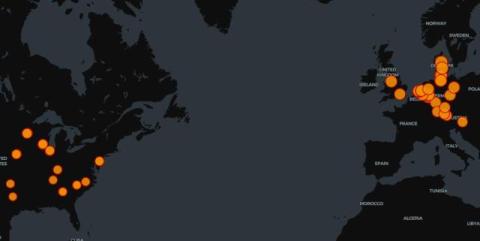
Researchers at Bitdefender are tracking 40 separate SMS phishing (smishing) campaigns impersonating transport authorities, toll operators, and parking services around the world. The researchers have observed more than 79,000 scam text messages with over 29,000 unique variants. The attacks are targeting users in multiple languages. “These scam messages are designed to create a sense of urgency and pressure drivers into acting quickly,” the researchers write.

Redesigning Security Culture for the Agentic Age

The launch of platforms like Moltbook, OpenClaw, and RentAHuman in early 2026 has provided an unsettling glimpse into the future. We are entering a phase of the digital workplace where AI agents no longer just assist us, they interact with one another, act autonomously in the physical world, and even hire humans for manual labor. In this environment, the traditional lines of control and agency are being redrawn.

Why Integrate Threat Intelligence Feeds into Email Security?

It's getting harder to distinguish legitimate emails from malicious ones as phishing messages mimic real conversations, use trusted domains and increasingly leverage AI to scale and refine attacks. This shift is forcing organizations to rethink how they approach email security. Static controls that rely on known indicators can't keep up with threats that are evolving daily. To close that gap, teams need email security systems with integrated threat intelligence feeds.

Regulation E and Digital Banking Fraud: What Financial Institutions Need to Know

Fake banking sites aren’t just a customer problem. CFPB guidance makes clear that when a fraudster obtains account access information through deception and uses it to initiate a covered EFT, the transfer may qualify as an unauthorized EFT under Regulation E. That means cloned login pages can create investigation obligations, provisional credit requirements, and reimbursement exposure for banks, even when the customer typed the password themselves.

DDoS Protection for Healthcare: Uptime, Compliance, and Patient Safety

Healthcare absorbed ~24 million attacks in 2025, a 115% increase year over year, according to the Indusface State of Application Security 2026 report. DDoS alone grew 39% across the sector. But disruption here is not just about lost revenue or downtime. When systems go dark, emergency rooms divert patients, doctors lose access to electronic health records, and appointments are cancelled.

Malicious node-ipc versions published to npm in suspected maintainer account compromise

On May 14, 2026, multiple malicious versions of the popular npm package node-ipc were published to the npm registry. Current public reporting identifies node-ipc@9.1.6, node-ipc@9.2.3, and node-ipc@12.0.1 as compromised versions containing an obfuscated credential-stealing payload. The malicious code was added to the CommonJS bundle, node-ipc.cjs, and is triggered when the package is loaded through require("node-ipc").