Security | Threat Detection | Cyberattacks | DevSecOps | Compliance

Penetration Testing Options Worth Knowing

Penetration testing has turned into one of those services every business claims to offer, but the actual delivery varies wildly. Some firms hand you an automated scan with a logo slapped on the report. Others put a named, accredited tester on your network who explains exactly what they found and why it matters. For businesses, charities and schools weighing up who to call, the accreditation behind the tester matters as much as the report format. Here are eight providers worth knowing, starting with a CREST-accredited option built around direct access to the people doing the work.


How to Develop Vulnerability Assessment Skills Through Cybersecurity Courses

This process is a vital part of digital protection because it helps organizations identify technical flaws before unauthorized users exploit them. Experts who develop accurate evaluation skills examine computers, networks, software and settings to determine where security upgrades are required. Cybersecurity courses offer structured information plus hands-on practice to help students learn evaluation methods, analyze results and suggest specific safety protocols.

The 12 Best Third-Party Risk Management Software Solutions (2026)

‍Last updated: August 20, 2026‍ A supplier breach or a tough question from a regulator can force a rushed third-party risk management (TPRM) evaluation. You need an answer before the next steering meeting. This list compares the 12 best third-party risk management tools in 2026, based on the capabilities that separate them in daily use, so you can shortlist faster. Whether you're an analyst running early research or a CISO approving the budget, you're working from the same criteria.

We Solved Visibility. Now We Have to Solve the Work

Consolidating every security finding into one place solves visibility, but it doesn’t reduce risk on its own. Aggregation without context just makes the backlog feel bigger. Real remediation depends on answering four questions about each exposure: what needs fixing, why it matters, where the fix happens, and who owns it.

How SLED can win the cybersecurity race with agentic AI

Adversaries are using AI to launch cyber attacks in record time, forcing security teams to measure responses in minutes instead of months. Phishing campaigns built with large language models (LLMs) achieve click-through rates 4.5 times higher than traditional methods,1 and the average time between initial compromise and lateral movement has fallen to just 29 minutes.2 This is a 65% increase from the prior year.2 State and local governments and higher education institutions are at an inflection point.

How to Improve MTTR: A Practical Guide for Security Teams

A critical alert enters the SOC queue during the overnight shift. By morning, the dashboard shows an acceptable headline MTTR because the incident was closed quickly after an analyst finally picked it up. The timeline tells a different story: the alert sat unassigned for nine hours because severity routing sent it to the wrong queue. The team optimized the visible number while leaving the dangerous delay untouched.

What does Cyber Essentials cover?

Cyber attacks cost UK businesses an estimated £14.7bn every year. The average cost of a significant breach for an individual business sits at almost £195,000. Half of all small businesses have experienced at least one attack in the past 12 months. For medium and large organisations, that figure rises to 82%. Those numbers should focus the mind.

How autonomous pentesting kills false positives

Ask any security engineer what they actually think about their vulnerability scanner, and you will get a version of the same answer. They trust maybe 20% of what shows up in the patching queue. The rest gets a suspicious glance, and a slow death in a backlog. That is the real cost of a false positive. It is quiet, it compounds, and it hollows the tool out from the inside. It is also the reason autonomous pentesting came to replace hypotheses with confirmed exploits.

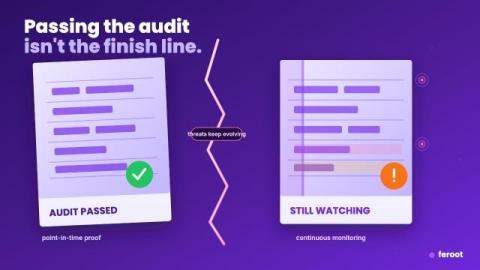
Beyond the Compliance Snapshot: Why GRC Needs Continuous Evidence

I recently had the opportunity to speak at the ISACA GRC Conference in San Diego about a challenge I see becoming increasingly important for governance, risk, and compliance teams: How do you prove your controls are actually working in digital environments that never stop changing?