Security | Threat Detection | Cyberattacks | DevSecOps | Compliance

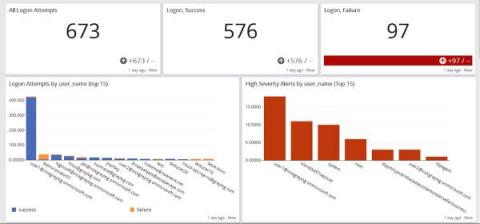
Automated incident response using Log360

Security teams are often overwhelmed with alerts daily, including false positives, and actions that require attention but might be placed on the back burner. But when alerts start stacking up and aren’t addressed promptly, important security concerns might go unnoticed and these can spiral into a data breach. The time to detect and respond to security incidents should be as short as possible to limit the time an attacker can carry out an attack.

Incident Response: Compare Options for Your Organization

The FBI published their 2021 Internet Crime Report with data from the FBI’s Internet Crime Complaint Center (IC3). This report shows that Business Email Compromise (BEC) / Email Account Compromise (EAC) attacks far exceed the volume and losses of Ransomware attacks. Organizations need to be prepared and know who they are going to call when they experience BEC/EAC, as well as ransomware, or other high-severity incidents.

End to End Incident Response Using Elastic Security

Join James Spiteri, PMM Director for Elastic Security, as he walks through an entire incident response scenario using several features of the Elastic Search platform including Security features such as SIEM, Endpoint Security, osquery, correlation and case management. Observability features such as logging and APM are also covered as part of this investigative workflow. Additional References.

Q1 2022 Incident Response Insights from Tetra Defense

Each quarter, Tetra Defense, an Arctic Wolf company, collects and analyzes data and insights from its incident response engagements in the United States. These statistics are a vital part of assessing the cyber threat landscape at large and are intended to guide underwriting strategies, loss prevention programs, broker advisement, and client security priorities.

6 Incident Response Best Practices You Should Follow

When it comes to cybersecurity, organizations need to be well-prepared for what comes next. Not only are cybercriminals leveraging ever more advanced technology, but the cost of a breach — in terms of cost, reputation, and damage — is on the rise. Mitigating risk requires having a robust incident response plan in place and dedicated team members on standby. Let’s take a closer look.

Incident Response vs. Disaster Recovery: Key Differences

As cybercrimes and security breaches become more sophisticated, data protection strategies have become more important to business survival. A critical element in an organization’s ability to effectively handle these incidents is to reduce downtime and minimize damage. This is where an effective incident response and disaster recovery plan comes into play.

CIS Control 17. Incident Response Management

The Center for Internet Security (CIS) offers Critical Security Controls (CSCs) that help organizations improve cybersecurity. CIS CSC 17 covers incident response and management. (In earlier versions of the CIS controls, handling of security incidents was covered in Control 19.) CIS CSC 17 focuses on how to develop a plan for responding to attacks and other security incidents, including the importance of defining clear roles for those responsible for the various tasks involved.

Ultimate Guide: Creating a Cyber Security Incident Response Plan

A cybersecurity Incident Response Plan (CSIRP) is the guiding light that grounds you during the emotional hurricane that follows a cyberattack. A CSIRP helps security teams minimize the impact of active cyber threats and outline mitigation strategies to prevent the same types of incidents from happening again. But as the complexity of cyberattacks increases, so too should the strategies that prevent them.

It's time to invest in your incident response - here's how

Taking proactive measures is critical to any aspect of a strong cybersecurity strategy. And today, the need for a robust incident response plan has never been greater. As more and more companies embrace remote work, we see an influx of personal devices on the corporate network. As a result, the potential attack surface expands while endpoint visibility is significantly reduced.