Security | Threat Detection | Cyberattacks | DevSecOps | Compliance

OPA vs. Enterprise OPA: Why You Need Enterprise OPA

We recently released Enterprise OPA, the drop-in enterprise edition of Open Policy Agent (OPA). With Enterprise OPA, we aim to solve several challenges large organizations encounter when using OPA. These include performance and memory usage when using large datasets, keeping authorization data up to date and performing policy updates in a safe way.

How to Detect SCARLETEEL with Sysdig Secure

The recent SCARLETEEL incident highlights the importance of detecting security threats early in the development cycle. With Terraform state files, attackers can easily access sensitive information and gain unauthorized access to your cloud infrastructure. In this case, the attackers exploited a containerized workload and used it to perform privilege escalation into an AWS account, stealing software and credentials.

GitGuardian Teams - Role-base Access Management

At GitGuardian, we work with customers of all sizes, some with many dozens of AppSec team members supporting tens of thousands of developers. The larger and more sophisticated the organization, the more they rely on Role-based Access Management to best administer user permissions. On the GitGuarian platform, we call this feature Teams. Sign up for a free trial of the business plan today to see how Teams can improve your remediation workflow.

GitGuardian Playbooks - Auto-Granting Access To Incidents

At GitGuardian, we know that time can be a critical factor when any incident involving secrets occurs. That's why our platform allows you to quickly and easily automate parts of your incident response. We call these automations "Playbooks". Our Auto-access granting playbook grants the right access to the right developers so they can work on the issue as soon as possible.

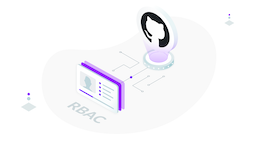
Enforcing Role-based Access Control (RBAC) Policies with OPA

A common use case our customers have for Open Policy Agent (OPA) is access control. The problem of access control is generally broken down into two parts, authentication and authorization. Authentication is about making sure we can trust someone’s stated identity, authorization is making decisions about who can do what.

Securing your CI/CD pipelines: How GitHub Actions can Help

This post discusses how GitHub Actions can enhance the security of CI/CD pipelines by automating security-related tasks and providing integration with other security tools, version control, access control, and auditing. These days, security has become more important than ever in software development processes. With cyberattacks becoming increasingly frequent and sophisticated, organizations must prioritize security throughout their software development lifecycle to protect their systems, data, and users.

Multi-layered Zero Trust with Yash Kosaraju

For this 18th episode of Access Control Podcast, a podcast providing practical security advice for startups, Developer Relations Manager at Teleport Ben Arent chats with Yash Kosaraju. Yash is Chief Security Officer at @Sendbird Sendbird's mission is to build connections in a digital world, providing APIs and services for chat products with API and tools to integrate into apps. This episode dives into how teams can build multi-layered security systems to go beyond zero-trust to let teams do their work but also provide checks.

GitGuardian incident auto severity scoring

Manual severity assignment requires a case-by-case examination of your open incidents and can be time-consuming for your teams. GitGuardian's severity scoring feature automates this approach, where and when applicable, to the incidents in your workspace so that you can save time on their triaging and prioritization. Automated severity scoring comes in handy after running a historical scan on your perimeter that surfaces hundreds or thousands of incidents. It can help you focus your remediation efforts on the most critical incidents first!

Schedule and Automate Postgres Backups on Kubernetes

Postgres, also known as PostgreSQL, is a powerful open-source relational database that has been around for over 30 years. It has a strong reputation for reliability, scalability, and performance, which is why it is used by a wide range of organizations, from small businesses to large enterprises, across various industries. Whether you need to store and retrieve large amounts of data, run complex queries, or support business-critical applications, Postgres can handle it all.