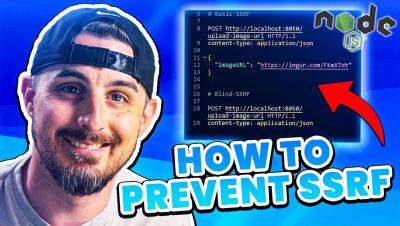
In today's video, we will be diving deep into keeping your Node.js applications secure from Server-side request forgery (SSRF). What are your experiences with SSRF? let us know in the comments below!
Windows Remote Desktop Service(RDS) in Microsoft Windows allows users to control a remote computer or virtual machine over a network using the Remote Desktop Protocol (RDP). To secure this access, it’s crucial to implement strong passwords to prevent brute force attacks and unauthorized access.
Watch the full video for more... About Snyk Snyk helps you find and fix vulnerabilities in your code, open-source dependencies, containers, infrastructure-as-code, software pipelines, IDEs, and more! Move fast, stay secure.
Group Policies are part of every Active Directory. Group Policy (GP) is designed to be able to change every system's configurations, from the least to the most privileged layer. Since it is so fundamental in the network management process, it is also very powerful for attackers to use as an attack vector. Therefore, GPO hardening is necessary to ensure that these policies are secure and not easily exploited by attackers, protecting the integrity and security of the entire network.
Watch the full video for more... About Snyk Snyk helps you find and fix vulnerabilities in your code, open-source dependencies, containers, infrastructure-as-code, software pipelines, IDEs, and more! Move fast, stay secure.
Best practices for mitigating various attack vectors are changing depending on the environment and server functionality. CIS baselines cover most of the relevant scenarios by addressing the first stage of your Hardening Windows Server project. CIS Benchmarks -What are They and How to Use Them Microsoft has been doing some work related to default security configuration, but there is still a big gap between security best practices (i.e. common benchmarks) and the default Windows configuration.
Watch the full video for more... About Snyk Snyk helps you find and fix vulnerabilities in your code, open-source dependencies, containers, infrastructure-as-code, software pipelines, IDEs, and more! Move fast, stay secure.
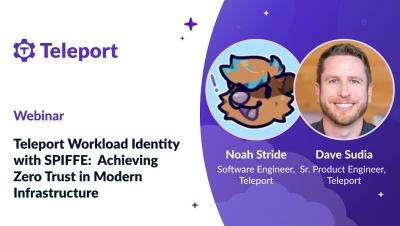
Teleport Access Platform generates cryptographic identity for users, machines, devices, and resources, creating a single source of truth for what users and machines are accessing what in your modern infrastructure. Now, engineers will be able to generate identity specific to workloads and services, enabling your full modern infrastructure stack to operate with zero trust authentication.
Watch the full video for more... About Snyk Snyk helps you find and fix vulnerabilities in your code, open-source dependencies, containers, infrastructure-as-code, software pipelines, IDEs, and more! Move fast, stay secure.