Security | Threat Detection | Cyberattacks | DevSecOps | Compliance

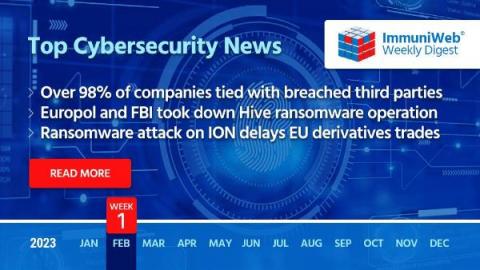
January Cyber Roundup

T-Mobile has once again fallen victim to a massive new cybersecurity breach, discovered on Jan. 5. The company has a history of hacks from recent years, for which it was fined hundreds of millions of dollars. Using weak API security, the attack caused the exposure of the personal data of more than 37 million customer accounts, which was apparently first accessed on or around Nov. 25. The stolen records include addresses, phone numbers and dates of birth.

Eliminate compromised passwords with One Identity Password Manager & Have I Been Pwned

It's a good question, and if you're curious about whether any of your email addresses or passwords were included in a data breach, you can easily find out at HaveIBeenPwned.com. This entirely free service, managed by Microsoft Regional Director & MVP Troy Hunt, lets you enter an email address or password to see how many breaches it has been included in.

How to Prevent Data Breaches in 2023

A data breach occurs when sensitive information is exposed to the public without authorization. These events are growing in popularity, costing businesses an average of US$4.35 million per event. Unfortunately, many companies are unknowingly still repeating the same mistakes causing some of the biggest breaches in history. To prevent your business from becoming another breach static, adjust your cybersecurity program to the proven breach prevention strategy outlined in this post.

Code Signing Security: Publishers Getting More Aware After GitHub's Certificate Breach

In this highly technology-driven world, no company is completely safe from cyber-attacks. Even one of the IT giants – GitHub faced exploitation, leading to the stealing of their Code Signing Certificates. There was only minimal impact on the organization and its software products. But, from the incident, almost every small, medium, and large-scale company has got aware of securing their software publisher certificates.

How The "No Fly List" Hack Highlights the Need for Cloud Security

The names of over 1.5 million individuals were published on the dark web in January after ahacker gained access to the TSA’s “No Fly List.” That’s a lot of names (including aliases and birth dates), so why wasn’t the list secure, and how did it get leaked? The entire breach came down to one small business with one misconfigured server.

Five Tips for Data Breach Prevention

Data breaches are on the rise and they can be both unexpected and costly. The average estimated cost of a data breach has peaked at an all-time high—an astounding $4.35 million, according to a 2022 report by IBM and the Ponemon Institute. Poor password hygiene and legacy software are two key culprits that will increase your chances of falling victim to a password breach.

How the Healthcare Industry Can Prevent Data Breaches

According to a report released by IBM and Ponemon, the healthcare sector has the highest rates of security breaches and cyber attacks globally. The average cost of a data breach for healthcare organizations is around $10.1 million, while the global average for all industries sits around less than half of that amount, at about $4.35 million.

Yandex Data Leak Triggers Malicious Package Publication

It would be big news, to say the least, if a large quantity of Google source code found its way into the public domain. Now imagine if the leak also included source code from Amazon and Uber. That’s the scale of the data leak that hit Russian tech giant Yandex. The risk here is that malicious actors could analyze the leaked code and discover exploitable security gaps.