Security | Threat Detection | Cyberattacks | DevSecOps | Compliance

What is Compliance Monitoring? Challenges, Solutions, Tools

As data privacy frameworks expand and operational risks evolve, security leaders and compliance officers face an ongoing challenge: Maintaining total visibility across employee activity, sensitive data, and internal controls without slowing down business operations. Compliance monitoring bridges the gap between policy and practice, giving organizations the proactive foresight needed to detect risks before they trigger costly violations.
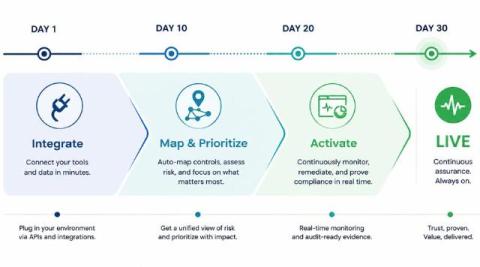
How to implement continuous control monitoring in 30 days

Continuous control monitoring may sound like a program you have to rebuild your whole GRC function to reach. It isn’t. It’s a phased build that integrates with the systems you already run, and a focused team can have continuous monitoring live across its priority controls in about a month.

Serving the most critical missions: Cloudflare for Government achieves FedRAMP Class D (High) Certified status

We believe the Internet must be a force for good, and that it requires a foundation of trust. Nowhere is that trust more critical than in public service. Government agencies are the stewards of a nation’s most sensitive data. They protect national security, critical infrastructure, and the personal information of every citizen. Cloudflare’s mission is to help build a better Internet.

Supply chain risk management: What it is and why enterprises need it

Accelerating security solutions for small businesses‍ Tagore offers strategic services to small businesses. A partnership that can scale‍ Tagore prioritized finding a managed compliance partner with an established product, dedicated support team, and rapid release rate. Standing out from competitors‍ Tagore's partnership with Vanta enhances its strategic focus and deepens client value, creating differentiation in a competitive market.

Meeting HIPAA Log Retention Requirements in 2026

You're usually not thinking about retention when the week starts. You're thinking about alert noise, an audit request from compliance, and a storage bill that keeps climbing because logs are piling up in your SIEM, EDR, or XDR stack. Then someone asks a simple question, and the answer isn't simple at all. Which logs must be kept, for how long, and where do you stop using hot storage and start preserving evidence for HIPAA?

EU AI Act Compliance Roadmap: What Enterprises Must Document and When

The EU AI Act reached a turning point this summer, and the headlines got it half right. Obligations for high-risk AI systems were postponed to December 2027 under the Digital Omnibus, adopted in June 2026. The transparency rules under Article 50 were not postponed, and they apply from August 2, 2026. ‍ Enterprises reading spring 2026 guidance are working from a timeline that no longer exists, and enterprises reading the headline about a delay may believe nothing is due.

What Is PCI DSS Compliance? the Essential Guide

You're reviewing payment flows, the bank has asked for proof, and the audit deadline suddenly feels real. The problem isn't usually that the team has done nothing, it's that nobody has turned day-to-day security work into evidence a card brand, acquirer, or assessor can use. PCI DSS compliance is where that gap gets exposed, and it's why security teams that already run SIEM, XDR, or EDR still get pulled into a separate compliance scramble.

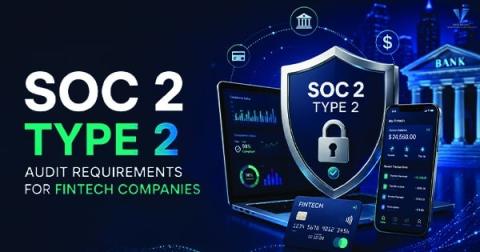
SOC 2 Type 2 Audit Requirements for Fintech Companies: The Complete Checklist

For fintech companies that move money, store account data, or connect to banking rails, trust must be documented. It cannot just be promised. A SOC 2 Type 2 report is the primary way financial platforms prove their security controls actually work. Demonstrating real fintech security and compliance unlocks enterprise partnerships, closes larger deals, and satisfies vendor security reviews. Banks and payment networks require these reviews before they integrate with you. Free Consultation.

Failed Your CMMC Assessment? Remediation and Retesting

CMMC is a major cost and time commitment, often months long and may cost tens or hundreds of thousands of dollars. A C3PAO checks 320 items tied to 110 NIST SP 800-171 controls. Outcomes: full approval, conditional approval with POA&Ms (usually 180 days), or denial. If denied, fix control gaps, update the SSP and evidence, then reapply. Use proper tools and avoid assessor conflict. CMMC is unquestionably a huge investment.

How Bitsight Helps Financial Institutions Align With Bank Negara Malaysia's RMiT Policy Document

Financial institutions are not short on cybersecurity policies, frameworks, or regulatory requirements. Turning those requirements into a living risk management program can be challenging. Organizations need a program that can keep pace as technology environments expand, cloud adoption grows, third parties are added, and external exposures change. Especially as the threat landscape continues to evolve.