Security | Threat Detection | Cyberattacks | DevSecOps | Compliance

Three easy steps to dramatically improve your AWS security posture: Step 1, set up IAM properly

Have you ever heard the saying that the greatest benefit of the cloud is that limitless resources can be spun-up with just a few clicks of the mouse? If so, you would be best served by forgetting that saying altogether. Just because cloud resources can be spun-up with a few clicks of the mouse does not mean that they should be. Rather, prior to launching anything in the cloud, careful consideration and planning are a necessity.

Cloud Native Security: The 4C Approach, The 3Rs & Strategies for Cloud Native Security

Many organizations today develop, build and deploy cloud native applications that utilize infrastructure and services offered by cloud computing providers like AWS, Azure or Google Cloud Platform (GCP). This trend highlights a critical consideration for organizations — how to secure applications, infrastructures and data in cloud-native systems.

Amazon EFS Backup and Restore for Amazon EKS

Amazon Elastic File System (EFS) is a simple, scalable and fully managed file storage service to support the storage and throughput needs of your Kubernetes applications. Amazon EFS is designed to be highly available and durable, however your EFS data can still be prone to data loss, data corruption, and have compliance issues. Amazon EFS Backup and Restore of data helps protect against data loss due to hardware failures, accidental deletion, ransomware attacks, or other types of disasters.

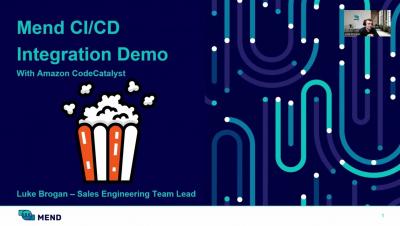
Secure your application development with AWS and Mend

Mend, formerly known as WhiteSource, effortlessly secures what developers create. Mend uniquely removes the burden of application security, allowing development teams to deliver quality, secure code, faster. With a proven track record of successfully meeting complex and large-scale application security needs, the world’s most demanding software developers rely on Mend. The company has more than 1,000 customers, including 25 percent of the Fortune 100, and manages Renovate, the open source automated dependency update project.

Sysdig Secure and Google Security Command center Integration - Why, What, How

Sysdig is a premier Google Cloud Platform (GCP) partner and has been working with Google towards the common goal of supporting our customers and securing their cloud journey for the last seven years. Sysdig is focused on securing and monitoring workloads running on Google Cloud – including Google Kubernetes Engine (GKE), Autopilot, Anthos, and more. All these various elements of GCP can be protected using Google Security Command Center. Learn more about how to enhance your GCP security.

Panel recap: Breaking Bad Security Habits with Corey Quinn

On December 8th, Clinton Herget and Simon Maple, Field CTOs at Snyk, had the opportunity to chat with Corey Quinn, Chief Cloud Economist at The Duckbill Group, podcast host, curator of “Last Week in AWS”, and snarky Twitter personality. Their conversation took a lot of fun turns, from ranting about the hour-long line to get coffee at AWS re:Invent, to Corey proclaiming that “SBOMs are a fantasy” (there’s more context to that… keep reading).

Building a resilient IT infrastructure: Where do enterprises start?

The shift towards hybrid work models has expanded the perimeters of work, adding to the burden on IT teams as they fight to stay resilient in the face of increased attack surfaces. All it takes for an invasion into an enterprise’s IT infrastructure is one compromised identity. So, what are enterprise identities? These are the user names, passwords, networks, endpoints, applications, etc., that act as gateways to business-sensitive information.

Cloud Native Security - A Complete Overview

As the need for a new security strategy grows, we use cloud-native security platforms (CNSP). Cloud services like containers, serverless security, platform as a service (PaaS), and microservices are the building blocks of cloud-native architectures. Because these services are loosely coupled- that is, they are not hardwired to any infrastructure components developers can frequently make changes without harming other parts of the application or other team members’ projects.