Security | Threat Detection | Cyberattacks | DevSecOps | Compliance

How to Build Custom Data Detectors Without Regex: DLP for Context-Aware Detection

DLP systems have traditionally relied on regex pattern matching to identify sensitive information. While regex excels at finding patterns, it fundamentally can’t understand context. It’s a massive limitation that forces security teams into endless cycles of tuning expressions and triaging false positives. Nightfall AI built prompt-based entity detection to solve this problem.

Nightfall Forensic Search Demo: Complete Insider Risk Investigation in Minutes

See how security teams reconstruct insider risk investigations with Nightfall's new Forensic Search feature, going beyond policy alerts to uncover the complete story behind every potential threat. In this 15-minute demo, watch three real-world investigation scenarios: Departing engineer exfiltrating code to personal cloud storage Sales associate moving customer data to USB devices CFO accidentally using shadow IT with sensitive financial data.

Effortless Data Security: From Discovery to Enforcement on a Single Platform

For years, data security has been divided into artificial categories. Data Loss Prevention (DLP) focused on enforcement. Data Security Posture Management (DSPM) focused on discovery. Insider risk management lived somewhere adjacent. And now, AI security has arrived as yet another bolt-on.

Beyond Pattern Matching: How AI-Native File Classification Solves Modern DLP Challenges

Legacy DLP operates on a fundamental constraint: it identifies sensitive data by matching patterns. Credit card numbers follow the Luhn algorithm. Social Security numbers conform to a nine-digit format. API keys match specific string patterns. This approach works for structured data, but it fails to address a critical reality: Your most sensitive assets aren't numbers. They're documents.

Welcome to the Protegrity Developer Edition Set-up Series

Stop struggling with complex security setups and get straight to building with the Protegrity Developer Edition. Our demo series, hosted by Dan Johnson, shows you how to deploy a full, self-contained data protection environment on your local machine in under 15 minutes using GitHub and Docker. You will learn to master everything from PII discovery and automated redaction to advanced encryption and semantic guardrails for AI workflows.

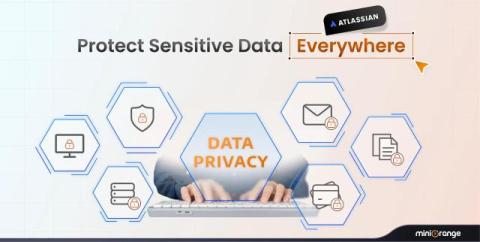
How to Secure Sensitive Data in Jira & Confluence with DLP (Data loss prevention)

In almost every major enterprise, Jira and Confluence are the default operating systems for innovation. They hold your organization's most vital intelligence, from product roadmaps to financial planning. Yet, while companies invest billions in fortress-like perimeter security, firewalls and VPNs, to keep external attackers out, they often ignore the fragility of their internal collaboration environments.

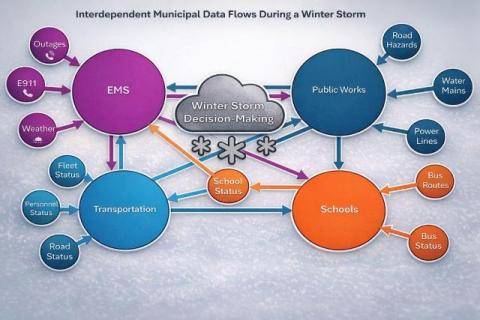
What Snowstorms Can Teach Us About Contextual Access and Data Interoperability

As Winter Storm Fern made its way across the US this weekend, children across the country were glued to phones, computers, or televisions as they tried to guess how long they would be out of school this week. Little do they know, however, the data, science, and lack thereof, that goes into that decision. School closures are the very public end of a complex and fast-changing dataset that is highly dependent on locality and can be wildly different on either side of a district line.

MCP & AI Agent Security: Addressing the Growing Data Exfiltration Vector

The security landscape is shifting. For the past two years, security teams have focused primarily on what users type into chatbots by monitoring interactions with ChatGPT, Gemini, and Claude. But a new risk vector is emerging, one that operates largely outside traditional security controls: AI agents accessing corporate data autonomously through the Model Context Protocol (MCP).

Nightfall DLP 2026: Corporate v. Personal Session Differentiation | Live Demo

See the future of data loss prevention in action. This live demo showcases Nightfall's breakthrough session differentiation technology that intelligently blocks sensitive file uploads to personal cloud accounts while seamlessly allowing them in corporate environments.

Semantic Guardrails for AI/ML - Protegrity AI Developer Edition

In this installment of our AI Developer Edition Set-up series, Dan Johnson, a software engineer at Protegrity, introduces semantic guardrails. Learn how to protect your LLM and chatbot workflows from malicious prompts and insecure AI responses. As AI becomes central to enterprise operations, controlling the context of conversations is a major challenge. Semantic guardrails provide a safety layer that ensures your AI stays on topic and never leaks sensitive PII.

AI-Powered Data Detection That Actually Works: 95% Precision, Zero Regex | Nightfall Product Launch

Tired of drowning in false positives? See how Nightfall's AI-powered detection achieves human-level accuracy and makes DLP automation possible. See three breakthrough capabilities from Nightfall: Prompt-based entity detectors - Protect custom IDs with natural language (no regex!) 23+ AI file classifiers - Detect source code, HR files, customer lists automatically Custom classifiers - Build your own in minutes with one sample file.
Featured Post

Passwords a necessary evil: Are we ready for a passwordless world?

For decades, passwords have been the gatekeepers of our digital lives. From logging into emails and banking apps to accessing social media and workplace systems, passwords have been the standard tool for authentication. Yet, as cyberattacks grow in sophistication and frequency, and as users juggle dozens of complex logins, it's clear that passwords are not only inconvenient, but they are increasingly insecure.

Coinbase's $400 Million Wake-Up Call: Why DLP Must Monitor Behavior, Not Just Content

In May 2025, Coinbase disclosed a data breach that exposed nearly 70,000 customer records—not through a sophisticated external attack, but through bribed customer service agents. The cryptocurrency exchange refused a $20 million ransom demand and instead pledged that amount toward catching those responsible. One arrest has been made in India, but the incident highlights a fundamental problem in modern security: your people can become your greatest vulnerability.

Data Exfiltration Prevention: 5 Best Practices for Modern Security Teams

The security landscape has shifted dramatically. Employees now work across dozens of applications, browsers, and devices—often using personal accounts alongside corporate ones. They're adopting generative AI tools at unprecedented rates, and your source code is moving between repositories faster than traditional DLP tools can detect. This creates a fundamental problem: how do you enable productive work while preventing corporate IP from leaving your trusted environment?

Top 10 Carbon Accounting Platforms Ranked for Data Security and Governance

Carbon accounting software has become essential for organisations facing mandatory emissions reporting. But as sustainability data grows in strategic importance, the security and governance capabilities of these platforms matter as much as their calculation engines. Regulators now treat ESG disclosures with the same scrutiny as financial statements. Investors make decisions worth billions based on sustainability metrics. A data breach, integrity failure, or audit finding in this domain carries consequences that security teams cannot ignore.

Find and Redact Your Data With Protegrity Developer Edition

Dan Johnson, a software engineer at Protegrity, demonstrates how to use the Protegrity Developer Edition to identify and redact Personally Identifiable Information (PII) from unstructured text. Building on our installation guide, we walk through real-world use cases using the Python SDK and Core Edition to transform "useless" raw data into secure, usable information for your AI and ML workflows.

The Rise of DLL Side-Loading Cyber Attacks and Browser Data Theft

Content originally created and published by Venak Security. Cybercriminals are increasingly adopting stealthy and advanced techniques, notably Dynamic-Link Library (DLL) side-loading and browser memory scraping, to install malware that stealthily harvests users’ passwords, credit card data, cookies, session tokens and more. These attacks blend social engineering, search manipulation and memory-level exploitation to bypass traditional defenses and compromise victims at scale.

USB Drive Security Best Practices to Protect Your Data

I’ve seen more data breaches caused by USB drives than you think. Not fancy hacks. Not nation-state attacks. Just people moving files quickly because they had to get something done. A USB drive feels harmless. It’s small, familiar and fast. You plug it in, copy a file, unplug it and move on. That’s exactly why it’s dangerous. USB flash drives and external storage devices carry the most valuable data an individual or organization owns. Contracts. Client records.

New Research Exposes Critical Gap: 64% of Third-Party Applications Access Sensitive Data Without Authorization

Reflectiz today announced the release of its 2026 State of Web Exposure Research, revealing a sharp escalation in clientside risk across global websites, driven primarily by thirdparty applications, marketing tools, and unmanaged digital integrations. According to the new analysis of 4,700 leading websites, 64% of thirdparty applications now access sensitive data without legitimate business justification, up from 51% last year - a 25% yearoveryear spike highlighting a widening governance gap.

Small Devices, Big Risk: USB Drives Threaten Enterprise Security

As cloud applications, SaaS platforms, and GenAI tools shape most modern workflows, one physical channel presents an ongoing risk: removable media. USB drives, external devices, and other portable storage remain some of the easiest ways for sensitive data to leave an organization and some of the quietest ways for threats to enter it.

New Databricks and Snowflake apps strengthen cloud data security and data pipeline visibility

If you’re like most companies we work with, you’re awash in opportunities (and a bit overwhelmed with pressure) to adopt AI. Of course, integrating new technologies means more data to manage and systems to monitor.

Cyberhaven Product Launch: Uniting DSPM & DLP to Secure Data in the AI Era

AI is rewriting data risk. On Feb 3, see how to fight back. Every week, AI makes your team faster—and your data more exposed. Files jump between new tools, models train on sensitive inputs, and traditional DLP is blind to the context that matters most. On February 3 at 11:00 AM PST, we’re pulling back the curtain on Cyberhaven’s unified DSPM & DLP platform—and showing how a single, AI‑native platform can finally keep up with how data actually moves.

Security Embedded In Your Data #Protegrity #datasecurity #cybersecurity #datacentric

Move beyond outdated security models that focus on protecting data infrastructure rather than the data itself. By embedding protection that travels with the data, you create a deterministic environment where data knows its own purpose and enables innovation at scale. Visit Protegrity.com to learn more.

Why Protecto Privacy Vault Is Ideal for Masking Structured Data

Picture this. You’re a data engineer at a healthcare company with millions of patient records in Snowflake. HIPAA requires you to protect PII before sharing data with researchers or running analytics. So you tokenize the data. And your system catches fire. Your joins break. Your ETL pipelines fail. BI dashboards return wrong results. ML model training jobs crash. All because something fundamental changed about your data architecture.

2025 Compliance Changes Review - What Organizations Must Know

The regulatory and compliance landscape evolved rapidly in 2025, with changes key changes affecting cybersecurity, privacy, and protective security. This review breaks down key compliance changes, offering insights into new requirements and how to ensure compliance in 2026.

Discovery And Protection of Your Data

In this video, Dan Johnson walks through the core data protection capabilities of the Protegrity AI Developer Edition. We transition from simple data discovery and redaction to more advanced workflows: protecting, unprotecting, encrypting, and decrypting sensitive PII (Personally Identifiable Information). What You’ll Learn: Timestamps: - Exploring the Help command and parameter options Resources.

The Right Business Outcomes #Protegrity #cybersecurity #datacentric #ai #datasecurity

We are at an inflection point where AI, compliance, and quantum are exposing the dangerous fragility of traditional "envelope" security. The organizations that thrive in the next decade will be those that set their data free by embedding deterministic protection directly into the data itself. The organizations that lead the next decade won't just have better AI, they'll have better data security. Visit Protegrity.com to learn more.

How to Stop Sensitive Documents From Leaking in Slack, Gmail, and ChatGPT (Demo)

Your security tools can detect credit card numbers, but they are blind to the files that actually matter. In this demo, we show how sensitive documents like: Internal source code Financial forecasts Performance reviews Customer lists are automatically detected and blocked in Slack, Google Drive, SharePoint, Gmail, and even ChatGPT using Nightfall’s new AI-powered file classifiers. No regex. No keywords. No training data.

Top 5 2026-Ready Data Masking Solutions for Regulated Industries

In regulated industries, organizations are dealing with more sensitive data than ever before. This includes consumer IDs, financial and health-related data, and even behavioral insights. However, when this sensitive data finds its way into test, analytic, or development environments, it poses a direct compliance and security threat. This is where data masking comes in. It enables the use of realistic data by removing or modifying personal identifiers.