Security | Threat Detection | Cyberattacks | DevSecOps | Compliance

The Future of Sustainability Requires Protecting Important Data Everywhere

While it might seem initially abstract, sustainability and data security are symbiotic. Allow me to explain. Regardless of the action or industry, critical data touches everything. Whether data is being used in pharmaceutical research, financial records, or intellectual property, securing it is the common imperative. This is especially true as it moves through various access points, the cloud, applications, the web, and various other transactions.
UK Security Policy Framework and Government Security Classifications Compliance

The UK government’s Security Policy Framework (SPF) outlines the expectations and requirements for security measures to be implemented across UK government departments, and external agencies handling government information and data assets. The framework covers various aspects of information security, including governance, risk management, technology and services, and culture and awareness.

Why Your Business Needs a Data Loss Prevention Strategy

Being a business leader in today’s business environment is no walk in the park. With over 2,200 cybersecurity attacks occurring daily, the task of protecting valuable business data adds an extra layer of complexity to your plate. How do you safeguard your crucial data, ensuring it’s not lost or compromised? You need a comprehensive Data Loss Prevention (DLP) strategy fortified by the best IT security software.

The Ultimate Guide to Classifying Exposed Credentials and Secrets

When looking for programmatic secrets, it’s not easy to figure out what is truly sensitive and how high-risk it is. There are many different types of secrets and credentials, and the context makes a difference. For example, there could be public URLs with tokens in them, public UUIDs, or credentials used in frontend code — these could all be considered API keys or secrets, but not necessarily at the same degree of sensitivity/severity as something like AWS credentials.

5 Guiding Principles to protect your IP effectively with Zero Trust

Zero Trust is the new Buzz word in the cybersecurity arena. Ever since, Forrester Analyst, Kindervag introduced the term Zero Trust in his article “Zero Trust Architecture”, traditional security measures have become obsolete. Zero Trust is a security framework that is based on an “I Trust No One” principle; it doesn’t matter if the user is within or outside the organization. A user is not granted access unless he/she is authenticated and authorized first.
Featured Post

GDPR - the benchmark for a global privacy framework

With the 5th anniversary of GDPR looming, this regulation continues to be a game-changer, setting the precedent for privacy and data laws around the world. In fact, the United Nations Conference on Trade and Development (UNCTAD) recently reported that 71% of countries now have data protection regulations in place and a further 9% have legislation in development. Countries such as Vietnam and Saudi Arabia have recently introduced new privacy laws. But, as we reflect on the anniversary of GDPR's introduction, just this week we've seen the first billion-dollar fine issued. So, what does this mean for data privacy moving forward?

Data loss prevention for developers

A security violation in the form of a data breach can create costly damage to a company's reputation. But what exactly is a data breach? The European Commission has divided data breaches into three distinct categories — confidentiality breaches, integrity breaches, and availability breaches: In this article, you'll learn more about what a data breach is and how you can prevent data breaches when designing and developing your software.

Australia's Defence Strategic Review and Data Centric Security

Australia recently released the 2023 Defence Strategic Review (DSR) which identifies investments required to deliver the Australian Defence Force posture required by 2032-33. In this blog, we explore the new DSR requirements and their impact on Defence and industry security practices.

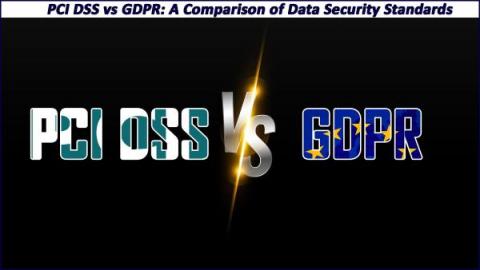
PCI DSS vs GDPR: A Comparison of Data Security Standards

Since the onset of the pandemic in 2020, global concern for data security and privacy has skyrocketed like a dazzling display of fireworks on New Year’s Eve. With an ever-increasing number of people utilizing online services and sharing their personal information on websites to engage in e-commerce transactions, the infrastructure for collecting and safeguarding consumer data has become of paramount importance.

Six Key Security Risks of Generative AI

Generative Artificial Intelligence (AI) has revolutionized various fields, from creative arts to content generation. However, as this technology becomes more prevalent, it raises important considerations regarding data privacy and confidentiality. In this blog post, we will delve into the implications of Generative AI on data privacy and explore the role of Data Leak Prevention (DLP) solutions in mitigating potential risks.

Stay Ahead of the Game & Identify Data Threats Faster

Cyber threats are a growing concern for organizations of all sizes. Data breaches, malware infections, and ransomware attacks can severely disrupt operations, including financial loss, reputational damage, and legal liabilities. As a result, it is essential to proactively monitor your environment and identify malicious activity to detect threats before they can cause significant damage.

Achieving NATO STANAG 4774 and 4778 Compliance

Efforts to facilitate critical information sharing between multinational coalition partners, including traditional and non-traditional allies, have become more critical in light of recent conflicts. In addition, partner nations need to share and work together on highly classified information at different security classifications and clearances, which poses a challenge to multinational collaboration efforts.

Freedom to Innovate: Data Privacy Methods

Your data protection methods provided through your platform are your lines of defense against cybercriminals, ransomware, and malware. In this episode, we explore the differences between data security, data protection, and data privacy. James Rice and Clyde Williamson will explore business cases, data access control, Protegrity technology, and detail out the inner workings behind data privacy.

How do Cloud Access Security Brokers (CASBs) Work and Should I Use One?

As organizations increasingly adopt cloud services and applications, securing access to these services becomes crucial to protect sensitive data and maintain compliance. Cloud Access Security Brokers (CASBs) have emerged as a key component in providing comprehensive visibility and control over cloud services.

Encrypting files and emails: A beginner's guide to securing sensitive information

The content of this post is solely the responsibility of the author. AT&T does not adopt or endorse any of the views, positions, or information provided by the author in this article. In today's digital age, sensitive information is constantly being shared and transmitted over various electronic devices and networks.

Updated Cato DLP Engine Brings Customization, Sensitivity Labels, and More

Last year, we launched Cato DLP to great success. It was the first DLP engine that could protect data across all enterprise applications without the need for complex, cumbersome DLP rules. Since then, we have been improving the DLP engine and adding key capabilities, including user-defined data types for increased control and integration with Microsoft Information Protection (MIP) to immediately apply sensitivity labels to your DLP policy. Let’s take a closer look.

Defining Your Organization's Attack Surface: The 4 Types of Attack Surfaces

Attack surfaces are a fundamental concept within information security. However, attack surfaces can be constituted of different things. For example, some formulations of an attack surface include not just software and hardware, but the people using them. In this post, we’re going to cover four common types of attack surface, discuss how you should think about the risks associated with each type, and best practices for addressing these risks.

How to Establish Cross-Border Transfer Systems that Help Protect Privacy

Cybersecurity, privacy and data flows will be key topics at this year’s G7 in Japan. Against this backdrop, it has been a year since last year’s amendments to the Act on Protection of Personal Information (APPI) introduced revised data breach reporting and cross-border data flow rules. Meanwhile, developments in the Asia-Pacific (APAC) region have introduced data localization obligations in a variety of countries.

Data Encryption At Rest vs In Motion in Microsoft 365

Data is the most important resource that a company possesses. Any data loss event can be extremely disruptive, with serious consequences including regulatory fines, major revenue loss, and reputational damage. Data encryption is crucial for any organizations that deal with sensitive data including customer and employee information, payment details, company financials, M&A documents, government and defense data, and more.

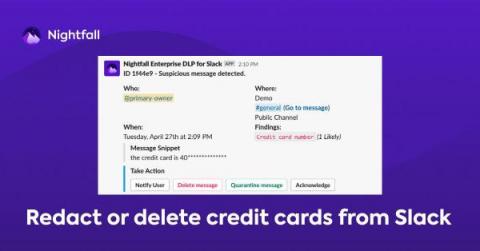
How to Prevent Credit Card Number Exposure in Slack for PCI Compliance

For many companies, a business credit card is part of the organization’s lifeblood. As such access to it must be vigilantly maintained. One potential area of risk is employees sharing credit card details in collaborative SaaS applications like Slack, where these details are at significant risk of being exposed to unauthorized parties.

A Modern DLP Solution Has These Non-Negotiable Characteristics

Security professionals were once confident that the valuable data they protected was safely tucked away inside heavily fortified data centers. But as businesses of all sizes undergo digital transformation, moving their data to the cloud and across numerous distributed locations, the demands placed on legacy data protection systems have changed drastically.

Introducing Nightfall AI for Zendesk | AI-Powered Cloud Data Leak Prevention (DLP)

Nightfall is the first AI-powered data leak prevention (DLP) solution for Zendesk. Discover sensitive data in support tickets and files. Automatically find and remove PII, PCI, and API keys, reducing the risk of breach and simplifying compliance.

How to Protect Customer Data in Zendesk - Part 3: Using Nightfall to protect critical stakeholder data

Nightfall’s Cloud DLP platform helps you limit access to sensitive data, by protecting the data where it is stored. With Nightfall you can redact, delete attachments, or make the data private in one click or via automated actions.

Coast Capital Savings Credit Union: Meeting Canadian Regulatory Standards for Compliance with Protegrity

One of Canada’s largest credit unions, Coast Capital Savings Credit Union (CSS), with over 50 branches across the country, needed to protect critical PII data stored in their AWS cloud environments, Amazon Redshift, AWS EMR, and AWS S3. CSS had to meet Canadian regulatory standards for compliance in 2021, including the Personal Information Electronic Documents Act (PIPEDA), along with a data transformation initiative surrounding its architecture.

How to Protect Customer Data in Zendesk - Part 2: Addressing Sensitive Data Growth

The proliferation of sensitive data continues to grow unabated, particularly for support agents using Zendesk. The Zendesk’s CX Trends 2022 Report found that ticket volume had increased across all channels, with webform/email up 10% YoY and chat up 17% YoY.

Protecting Intellectual Property (IP) in the Supply Chain

Data security policies are most often targeted around insider threats and external attackers, but your distributors can equally put intellectual property (IP) protection and other sensitive data at risk. IP is arguably a business’s most valuable asset and can take the form of product designs, software code, media content, etc. Protecting your IP is important because it allows your business to maintain a competitive edge in the market and generate revenue from your innovation.

Privacy is Power: The Value of Training for Modern Data Protection

We’ve all seen it in the movies: The chief of security declares that no one could ever steal the “Famous Jewel” because it’s protected by thick glass, an impenetrable system of motion-detecting lasers, and, finally, a weight-sensitive sensor. Cut to the next scene, where a thief, dressed in sleek black, zip-lines from an open skylight, shorts the lasers, scores the glass, and with split-second timing, swaps the jewel for a replica of equal weight.