
Security | Threat Detection | Cyberattacks | DevSecOps | Compliance

AI Attacks, CaaS & the New Reality of Banking Security

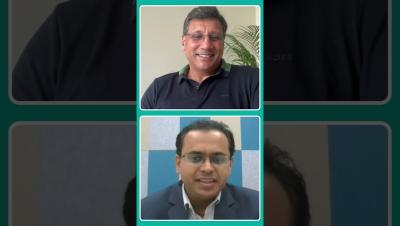
This week, in the episode – Guardians of the Enterprise, Ashish Tandon, Founder & CEO, Indusface, speaks with Madhur Joshi, CISO at HDB Financial Services (part of the HDFC Group), on how large financial institutions are navigating a rapidly evolving cyber threat landscape. The conversation covers the rise of AI-driven attacks, Cybercrime-as-a-Service (CaaS), and the growing complexity that comes with expanding digital footprints across cloud, applications, and APIs.

Why Confusing ChatGPT and LLMs as the Same Thing Creates Security Blind Spots

When news broke that the Head of CISA uploaded sensitive data to ChatGPT, the response was predictable: panic, headlines, and renewed questions about AI safety. But this incident reveals more about confusion than actual risk. The real issue? Most organizations don’t understand what they’re actually risking when they use AI tools. Let’s fix that.

Moltworker (for OpenClaw) & Markdown for Agents: Running AI on Cloudflare

Celso explains how Markdown for Agents was conceived, built, and shipped in just one week, why AI systems prefer markdown over HTML, and how converting a typical blog post from 16,000 HTML tokens to roughly 3,000 markdown tokens can reduce cost, improve speed, and increase accuracy for AI models. We also explore Moltworker, a proof-of-concept showing how a personal AI agent originally designed to run on a Mac Mini can instead run on Cloudflare’s global network using Workers, R2, Browser Rendering, AI Gateway, and Zero Trust.

OpenClaw Security Checklist for CISOs: Securing the New Agent Attack Surface

OpenClaw exposes a fundamental misalignment between how traditional enterprise security is designed and how AI agents actually operate. As an AI agent assistant, OpenClaw operates with human permissions, executes actions autonomously, and processes untrusted content as input, all while sitting outside the visibility of conventional security tools.

12 Critical Shadow AI Security Risks Your Organization Needs to Monitor in 2026

What data are your employees feeding into unapproved AI tools? If you can't answer that question, then you might have shadow AI security risks that you don't know about. The Netwrix Cybersecurity Trends Report 2025 found that 37% of organizations have already had to adjust their security strategies due to AI-driven threats, while 30% haven't started AI implementation at all. That gap between how fast AI threats are evolving and how slowly organizations are responding is where shadow AI thrives.

Secure AI Code Generation: From Policy to Practice

IIf you’re using AI to generate code, you’re likely moving faster than ever. You’ve probably felt that surge of productivity when a complex logic problem gets solved in seconds or boilerplate code appears instantly. But here is the problem: speed without guardrails creates security debt, and with AI, that debt accumulates at a terrifying rate. Recent data paints a concerning picture.

The Future of AI Agent Security Is Guardrails

If you've been paying attention to the AI agent space over the past few months, you've probably noticed a pattern: every week brings a new story about an AI agent doing something it absolutely should not have done: reading private emails, exfiltrating credentials, or executing shell commands that a human would have never approved. The OpenClaw saga alone gave us exposed databases, command injection vulnerabilities, and a $16 million scam token, all in the span of about five days.