Mailchimp
Not subscribed to OpsMatters Newsletter


A new vulnerability was discovered in the Apache Log4j library. Tracked as CVE-2021-44832, this bug may allow arbitrary code execution in compromised systems when the attacker has permissions to modify the logging configuration file. CVE-2021-44832 has received a CVSS score of 6.6 out of 10, and it affects all versions of Log4j from 2.0-alpha7 to 2.17.0, excluding 2.3.2 and 2.12.4. This is the fourth Log4j vulnerability addressed by Apache in December 2021.
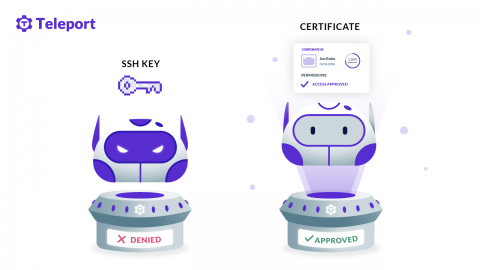
Use of misused or stolen credentials is the number one cause of data breaches. Using Password123 is worthy of a good laugh, but there are other passwords that are used everyday: SSH keys and other tokens used to access critical infrastructure. Teleport recently commissioned a survey of 1000 IT, DevOps and Security professionals and found that passwords are the number one way of managing access to infrastructure.
Whether you’re running Microsoft’s SQL Server (soon to run on Linux) or the open source MySQL, you need to lockdown your databases to keep your data private and secure. These 11 steps will guide you through some of the basic principles of database security and how to implement them. Combined with a hardened web server configuration, a secure database server will keep an application from becoming an entry point into your network and keep your data from ending up dumped on the internet.
Zero trust is everywhere, and it will change the way we undertake security. Just as zero trust concepts are shaping the data center and our networks, they will shape cloud environments, as well. Many of the challenges of cloud security arose because we moved workloads to the cloud with no clear idea of how to secure them. Zero trust provides exactly those ideas.
Manchester, UK – 22nd December 2021 – Netacea, the bot detection and mitigation specialist, today announces that its parent company Intechnica has completed a new £8.5m funding round with Mercia Asset Management PLC (AIM: MERC). The investment will accelerate Netacea’s growth in the UK and the US. Netacea is a fast-growing cybersecurity business that detects and mitigates against bot attacks that target mobile, web and API applications.
Digital signatures are increasingly used in companies and public administrations. However, without adequate cybersecurity measures, this method can be a vector for cybercriminals and fraudsters: through social engineering they can dupe signer victims into believing a document is legitimate and, through their signature, obtain authorization to carry out other operations without their consent, among many other malicious activities. So, how can we avoid this?
CrowdStrike’s goal is to stop breaches — and we do that better than any cybersecurity company in the world. As attackers advance their tactics and techniques, we continually refine our tools and capabilities to stay ahead of them. We recently added a new feature to the CrowdStrike Falcon® sensor: Hardware Enhanced Exploit Detection, which uses hardware capabilities to detect complex attack techniques that are notoriously hard for software alone to detect and prevent.
As previously predicted to unfold, at approximately 7:35 PM GMT, 28th of December 2021, another security vulnerability impacting the Log4j logging library was published as CVE-2021-44832. This new CVE-2021-44832 security vulnerability is affecting versions up to 2.17.0, which was previously thought to be fixed. This vulnerability is similar in nature to CVE-2021-4104 which affected the 1.x branch of Log4j.