Mailchimp
Not subscribed to OpsMatters Newsletter


CurrentWare version 7.0 is here! Here are the most exciting features that we’d love to highlight. CurrentWare 7.0 is fully compatible with Windows 11. Learn more about the changes in version 7.0 in the release notes
As technology folks, we are often under a lot of pressure to fix some deployed code, update an infrastructure component, or patch some code. Often it’s with little notice and needs to be done 5 minutes ago. The gamble with any “zero turnaround” is the rush to fix now vs. taking the time to test and check.
Continuing with our security-first approach to Kubernetes data protection, in addition to Kubernetes Security Posture Reviews to scan your environment for vulnerabilities and misconfigurations, CloudCasa also added Cloud Security Posture Management for Amazon Web Services (AWS). Most attacks on cloud are the result of misconfigurations and mistakes, per industry analyst, Gartner. The research firm went on to forecast that through 2025, 99% of such attacks would be the customer’s fault.
Trustwave security and engineering teams are on heightened alert and are actively monitoring malicious cyber activity associated with and adjacent to the escalating military conflict between Russia and Ukraine. Trustwave is working closely with its clients around the world to enhance cyber preparedness during this time.
The job for CIOs, CISOs and their security and IT teams may be more complex than ever in 2022. Ongoing support for hybrid workforces, coupled with the continued shift to the cloud, has expanded the threat surface. At the same time, the infrastructure and environments supporting organizations are growing ever more vulnerable. According to the National Institute of Standards and Technology (NIST), more than 18,000 vulnerabilities were reported in 2021.
Migrating to the cloud has allowed many organizations to reduce costs, innovate faster and deliver business results more effectively. However, as businesses expand their cloud investments, they must adapt their security strategies to stay one step ahead of threats that target their expanded environment. Managing, securing and having visibility across endpoints, networks and workloads is not an easy feat. It requires a unified defense-in-depth approach.
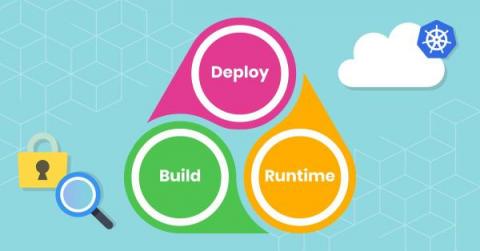
The rise of cloud native and containerization, along with the automation of the CI/CD pipeline, introduced fundamental changes to existing application development, deployment, and security paradigms. Because cloud native is so different from traditional architectures, both in how workloads are developed and how they need to be secured, there is a need to rethink our approach to security in these environments.