Mailchimp
Not subscribed to OpsMatters Newsletter


When it comes to cloud security solution options, there are many items to consider including protecting sensitive data, regulatory compliance, and protecting your organization from cyber security threats. Here are the options we recommend.
Our latest industry research – ‘The 2022 State of IT Security Automation Adoption’ – which we have undertaken for the second year running and expanded into other regions including the UK, USA and Australia, shows strong signs that cybersecurity automation adoption is advancing, but 97% of respondents say they have experienced problems during implementation.
As cloud adoption and digital transformation increases, more sensitive data from applications is being stored in data containers. This is why effective container security controls to securely manage application connectivity is an absolute must. AlgoSec CTO and Co-Founder, Prof. Avishai Wool provides some useful container security best practices to help you do just that.
Cybersecurity audits are essential for any organization to review, analyze, and update its current IT infrastructure, information security policies (ISP), and overall cybersecurity risk management protocols. Audits are a critical part of information security and should be performed annually to ensure that new policies are implemented properly, potential vulnerabilities are identified, and the school maintains compliance with regulatory standards.
According to research by Statista, over 80% of internet users in the US fear that their personal information is vulnerable to hackers. Data privacy defines how organizations and other entities collect data on other individuals, how they process it, for what purposes they collect and process it, how long they keep it, and how they protect it, to name a few. In the modern digital environment, data privacy certifications are essential since they impart the skills needed to become privacy specialists.
A coworking space, or communal workspace, enables professionals from different companies and industries to share the same office environment. These spaces first became popular among freelance workers, then became the preferred workplace for start-ups, but now, since the hybrid work model has become part of everyday life, companies planning to downsize or close offices see these places as their new workspace.
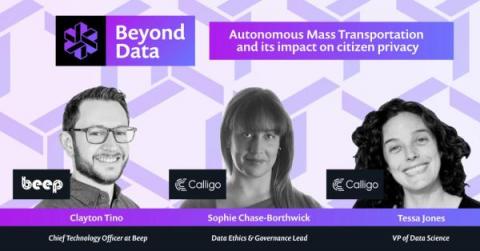
In our second Beyond Data podcast episode ‘Autonomous mass transportation and its impact on citizen privacy’, we will sit down with Beep’s Chief Technology Officer, Clayton Tino to explore the current landscape of autonomous vehicles (AVs), whether AVs truly can replace the human factor in public transportation, and how AV ethics can be holistically measured. Here we give you a snapshot of that fascinating discussion by digging into a few of the explored topics.