Mailchimp
Not subscribed to OpsMatters Newsletter


Five worthy reads is a regular column on five noteworthy items we’ve discovered while researching trending and timeless topics. This week we are exploring the world of deepfake technology and its impact on different industries and the society.
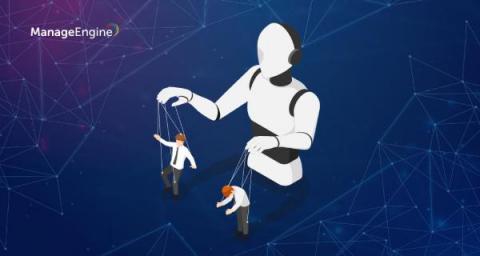
Everyone loves automation, and it can be easy to assume that the more you automate, the better. Indeed, falling short of achieving fully autonomous processes can feel like a defeat. If you don't automate completely, you're the one falling behind, right? Well, not exactly. Although automation is, in general, a good thing, there is such a thing as too much automation. And blindly striving to automate everything under the sun is not necessarily the best strategy. Instead, you should be strategic about what you do and don't automate.
When it comes to the future of global file sharing, customers and vendors of these solutions must work together to develop the ideal solution for each user’s unique needs. Indeed, buyers are often looking for more than the features and benefits of global file systems - they want solutions to their most pressing business problems. How will global file sharing solutions keep up?
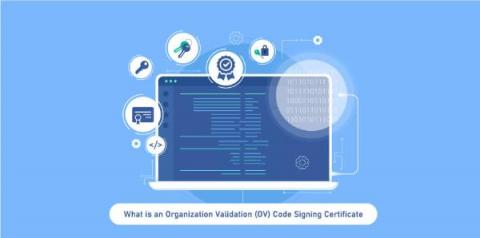
An organization must utilize an OV Code Signing Certificate whenever it releases any software. However, many firms are unaware of it and launch their software without any digital sign. Therefore, not using an Organization Validation Code Signing becomes a drawback. So, by moving further, you will get a detailed insight into the OV Code Signing Certificate. It will help you to understand its meaning, working, need, benefits, and approach to choosing an authentic provider.
The rise in working from home has popularized remote access to the company workplace. Although remote work increases productivity and facilitates some operations, it may also be the gateway that cybercriminals have been waiting for. According to the latest 2022 Verizon Data Breach Investigations Report, misuse of remote access is the fourth most common initial attack vector.
In India, there have been several Multi-Level-Marketing (MLM) frauds. Investing in stock shares and commodities, paid per click, investing in the IT sector, or investing in infrastructure have all resulted in scams. Aaryarup/ATCR, Unipay, Stock guru, TVI Express, and others swindle over Rs 10,000 crores. Multi-level Marketing is a sales strategy by some companies to sell directly to the customers.
As the number of high-profile cyberattacks and data breaches has increased in recent years, more companies have made investments to better secure their systems and develop incident response plans. While these are essential concerns, a firm’s obligations don’t simply end when a threat is removed from the network and they are able to resume normal operations. They must also notify those whose data may have been impacted by the breach.
The increase in successful cyberattacks driven by both an explosion of ransomware activity and a series of high profile zero-day vulnerabilities, is forcing cyber insurers to further scrutinize the companies they insure and the policies they offer.
A selection of this week’s more interesting vulnerability disclosures and cyber security news. For a daily selection see our twitter feed at #ionCube24.