Mailchimp
Not subscribed to OpsMatters Newsletter


Threat actors will always target the things most important to businesses, and today, that means applications–the lifeblood of the global economy. As the recent Mend Open Source Risk Report reveals, the ongoing rise in open source vulnerabilities and software supply chain attacks presents significant business risk. The number of open source vulnerabilities are growing, just as threat actors are launching increasingly sophisticated attacks.
Netskope has just published the Monthly Threat Report for February, with this month’s report focused on what is going on in Europe. I don’t intend to summarise the report in this blog, instead I want to zoom in and study a continuing trend that was highlighted in there; one that is unfortunately heading in the wrong direction.
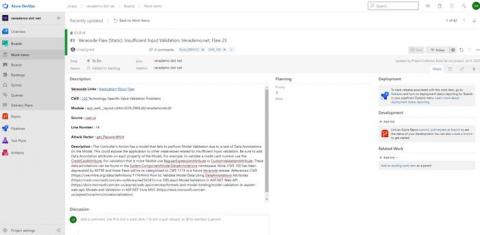
Static Application Security Testing (SAST) tools present a significant opportunity for organizations looking to reduce application security risk. However, not all workflows or tools are created equal. Using the right SAST tools at the right times, you can seamlessly integrate and scale security workflows throughout the software development lifecycle (SDLC).
Last month, we hosted a webinar with our CISO, Karim Beldjilali, who was formerly the CISO of Rightway a healthcare startup. Karim shared important security lessons for healthcare organizations leveraging cloud applications across their workforce. We briefly share the highlights below.
39% of organizations already use low-code and another 27% plan to start doing so in the next year (Forrester). By 2025 more than 70% of all application development will be done using no-code/low-code (LCNC), according to Gartner. LCNC is already everywhere – so what does that mean for your business?