Mailchimp
Not subscribed to OpsMatters Newsletter


Uncertainty looms large on the horizon as businesses deal with the difficulties of a downturn in the economy. Financial limitations, workforce reductions, and rising cyber threats exacerbate the complexity of such times. Organizations must prioritize their core competencies in this constantly changing environment while protecting their valuable assets from potential risks. By utilizing managed security services, organizations can achieve this delicate balance.
Threat Intelligence Analyst How does phishing-as-a-service (PhaaS) really work, and can it really bypass MFA? Here, we will walk you through the user interface of a PhaaS platform, and how its users can quickly build their own attacks using the built-in attack models and templates (and bypass MFA). For a layered approach, beyond MFA, we will introduce you to the benefits of using a threat intelligence solution to stay-ahead of emerging and advanced phishing attacks.
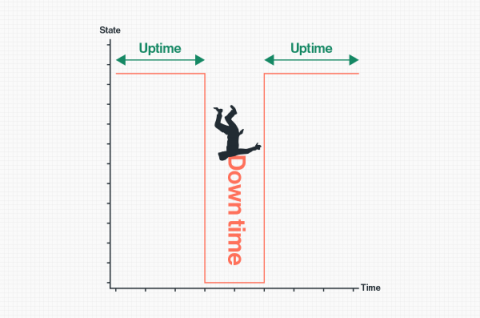
High availability may be top of mind for your organization, and if not, it really should be. The cost range of an unplanned outage ranges from $140,000 to $540,000 per hour. Obviously, this varies greatly between organizations based on a variety of factors specific to your business and environment. You can read more on how to calculate the cost of an outage to your business here: Gartner.
In this blog post, we will explore how the computer security landscape has expanded to reach below the operating system levels, aiming to address areas that are often overlooked or completely neglected in cybersecurity. Attackers have discovered techniques to establish long-term persistence in compromised hosts by injecting malicious code to run before the operating system loads in areas commonly referred to as Basic Input Output System (BIOS).
The term artificial intelligence is used to describe an IT system’s simulation of human intelligence processes, such as the ability to adapt, solve problems or plan. Artificial intelligence systems cover several of these features at present and, with the advent of ChatGPT, their use has become widespread in everyday life. However, this has also resulted in organizations exploiting the term "artificial intelligence," seeking to capitalize on its appeal.
Researchers at Trustwave are tracking an increase in the use of QR codes to spread phishing links. “Being open-source, QR code generators have become accessible to anyone with access to the internet,” the researchers write.
With the goal of achieving robust and efficient data management, one cannot overlook the prowess of Rubrik Secure Cloud (RSC), a platform encapsulating a comprehensive suite of GraphQl APIs. As many organizations trust both Rubrik and ServiceNow for their operational needs, blending these two systems creates a potent synergy.
The most common types of cyberattacks are phishing, variations of password attacks, malware, spoofing, supply chain attacks, DDoS attacks, identity-based attacks, IoT attacks and insider threats. Continue reading to learn more about what these cyberattacks are and how to keep yourself protected from them.