Security | Threat Detection | Cyberattacks | DevSecOps | Compliance

What is the Internet of Things (IoT)? Definition and Critical Risks

The internet of things (IoT) is a system of interconnected computers, devices, digital machines, and objects, all marked with unique identifiers (UIDs) and enabled to transfer and share data over a network. It was first coined by Kevin Ashton in 1999 when he envisioned a future where things communicated with each other, apart from human interaction With the evolution of web-enabled smart homes and smart devices in nearly every corner of life, IoT attack surfaces begin to emerge.
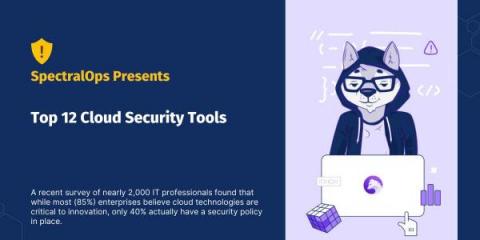
Top 12 Cloud Security Tools for 2022

A recent survey of nearly 2,000 IT professionals found that while most (85%) enterprises believe cloud technologies are critical to innovation, only 40% actually have a security policy in place. On top of this, almost half of the respondents using cloud infrastructure reported their engineers and developers circumvent or ignore cloud security and compliance policies, demonstrating the importance of automation and monitoring technology.

Automating Azure Files Restore in Azure Kubernetes Service

If you are considering Azure Files as the persistent storage for your Azure Kubernetes Service (AKS) applications, there are important considerations around AKS backup and recovery with implications on how you can perform Dev, Test, and Staging. This article outlines these data management considerations in detail and how to work around Azure Files limitation to achieve feature parity with using Azure Managed Disks.

How intelligent are AI tea-making robots?

When it comes to how truly intelligent Artificial Intelligence (AI) is, it’s a polarizing debate. Either AI will solve the world’s woes or robots will rule us all – Matrix-style. But it’s all a little more complicated than Hollywood makes it seem… For a deep dive, do listen to our Beyond the Data podcast hosted by Sophie Chase-Borthwick (Calligo’s Global Data & Governance Lead) and Tessa Jones (VP of Data Science Research & Development).

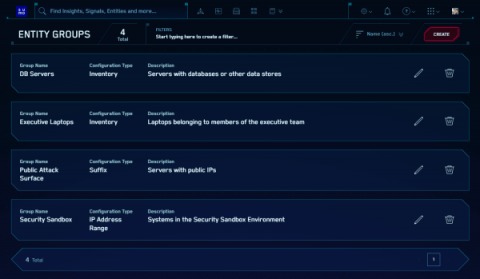
Use new Cloud SIEM Entity Groups to make threat response more efficient

Security analysts and administrators need every advantage to keep up with prioritizing and investigating alerts. A SIEM (security information and event management) solution helps uncover threats, but it takes a lot of time assigning and updating tags, criticality, and signal suppression. Sometimes users opt to skip the step altogether, especially if there are a lot of entities to add or update at once. Other times, they introduce errors during this manual step.

The EU's new AI Act-What We Can Learn From the GDPR

Artificial Intelligence (AI) is rapidly becoming ubiquitous in supporting key business decisions, and for many organisations it is critical for their digital transformation and new business models. With organisations quickly driving forward to identify new ways to extract competitive value from their data, the regulators are preparing to step in.

Higher Ed Campuses Have Digitized: Protecting Sensitive Data Requires a Unified Approach

Higher education institutions have long been subjected to ransomware and other cyber attacks, which has had a huge impact on their operations. In 2020 alone, ransomware attacks affected nearly 1,700 U.S. schools, colleges and universities – which is an increase of 100% over the previous year. The average cost of these attacks were $2.73 million in downtime, repairs and lost opportunities.