Security | Threat Detection | Cyberattacks | DevSecOps | Compliance

De-identification of PHI (Protected Health Information) Under HIPAA Privacy

Protected Health Information (PHI) contains sensitive patient details, including names, medical records, and contact information. De-identification of PHI is a critical process that enables organizations to use this data responsibly without compromising patient confidentiality. The Health Insurance Portability and Accountability Act (HIPAA) establishes strict rules to ensure the privacy and security of PHI, making de-identification essential for compliance.
Mastering Credential Management: Top Tips & Best Practices

Credential management means securely managing user credentials to control access to important systems and data. With growing cyber threats, it has become essential for protecting sensitive information and meeting compliance standards. In this article, we’ll explore what credential management is, why it matters, and the best practices and tools to enhance your security.

Open Redirect? Game Over! Salt Security Neutralizes a Sneaky API Attack Vector

We are excited to announce a significant Salt Security API Protection Platform upgrade. We have recently introduced a new detection feature targeting a prevalent yet often neglected vulnerability: open redirect attacks. This issue is so severe that it is highlighted in the OWASP Top 10 API Security Risks!

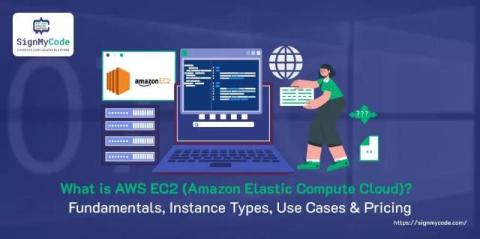
What is AWS EC2? Everything about EC2 Fundamentals in AWS

Elastic Compute Cloud (EC2) is an Amazon Web Services (AWS) hosting service that extends scalable and secure virtual computing systems known as instances. They allow users to have their applications hosted in a scalable environment whereby computing resources can be easily scaled up or down as necessary. EC2 provides several instance types that can handle a variety of uses, from general-purpose and compute instances to those designed for memory-intensive applications.

Securing the Backbone of Enterprise GenAI

The rise of generative AI (GenAI) over the past two years has driven a whirlwind of innovation and a massive surge in demand from enterprises worldwide to utilize this transformative technology. However, with this drive for rapid innovation comes increased risks, as the pressure to build quickly often leads to cutting corners around security. Additionally, adversaries are now using GenAI to scale their malicious activities, making attacks more prevalent and potentially more damaging than ever before.

Advanced Techniques for De-Identifying PII and Healthcare Data

Protecting sensitive information is critical in healthcare. Personally Identifiable Information (PII) and Protected Health Information (PHI) form the foundation of healthcare operations. However, these data types come with significant privacy risks. Advanced de-identification techniques provide a reliable way to secure this data while complying with regulations like HIPAA.

How Open-Source Security Frameworks Drive Better Cyber Defense

Open-source security frameworks are an essential tool in the cybersecurity arsenal. These frameworks provide the foundation for building secure systems and adhering to key industry standards. Yet, despite their importance, many practitioners and organizations fail to tap into the full potential of these frameworks. Exploring them in depth can unlock significant value for businesses, developers, and security teams.

Everything You Need to Know About Grok AI and Your Privacy

Since the birth of ChatGPT in 2022, the AI boom has affected our lives dramatically. AI technology is becoming so crucial in our work and daily lives that it is projected to contribute $15.7 trillion to the global economy by 2030. A recent addition to the AI market is Grok AI, a generative AI chatbot based on xAI, launched in 2023 by Elon Musk.