Security | Threat Detection | Cyberattacks | DevSecOps | Compliance

AI is cybersecurity's biggest threat

It’s also its greatest defense The biggest threat in our rapidly evolving cybersecurity landscape is artificial intelligence (AI).1 It’s also our greatest defense. Cybersecurity is a high-stakes game where everything is on the line and decisions have to be made fast. For years, cybersecurity strategy has been about increasing visibility to make informed decisions from vast amounts of data.

5 proven ways to secure your hybrid network environment during team convergence

Watch the experts edition panel discussion featuring ESG Principal Analyst John Grady and AlgoSec leaders as they explore: How security responsibility is converging across cloud and datacenter environments—and what that means for your team The top causes of cloud breaches—and how to stop them before they spread 5 proven ways to unify visibility, policy enforcement, and zero trust across hybrid multi-cloud networks How to automate security workflows without slowing down innovation Real-world insights on AI risks, agent sprawl, and tool fragmentation in a converged security world.

Mastering API Security Testing: Stop BOLA and the OWASP Top 10 Before Deployment

APIs drive modern applications, but their increasing complexity leaves them vulnerable to attacks. How can you ensure robust API security? Join Wallarm’s webinar to discover how to tackle today’s toughest API security challenges with advanced API security testing strategies. In this webinar we will cover: Learn how Wallarm’s innovative solutions can help you identify vulnerabilities, implement reliable security measures, and streamline your API testing process. Gain actionable insights into tools, best practices, and strategies to protect your APIs effectively.

Bits AI Security Analyst: Automate Cloud SIEM investigations

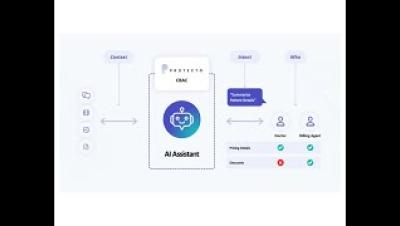
Datadog's Bits AI Security Analyst transforms the way security teams handle investigations by autonomously triaging Datadog Cloud SIEM signals. Built natively in Datadog, it conducts in-depth investigations of potential threats and delivers clear, actionable recommendations. With context-rich guidance for mitigation, security teams can stay ahead of evolving threats with greater efficiency and precision.

How CISOs are using AI to automate risk assessments in 2025

In this article In 2025, the role of the Chief Information Security Officer (CISO) and compliance leadership has become even more critical in ensuring that risk assessments are not only comprehensive but also agile and adaptive. Artificial Intelligence (AI) has emerged as a transformative force in cybersecurity, enabling risk assessments to be automated, more accurate, and proactive.

Leveraging AI to reduce cybersecurity costs and risks: A CISO's guide

In this article Chief Information Security Officers (CISOs) face a dual imperative in the digital landscape of today: safeguarding their organizations from an ever-evolving threat landscape while managing escalating security costs. Artificial Intelligence (AI) offers transformative potential in meeting these challenges by automating threat detection, streamlining compliance, and optimizing resource allocation.

AI and the 2025 SIEM landscape: A guide for SOC leaders

Security teams often find themselves having to put out the immediate fires in front of them, but this comes at the expense of implementing a more methodical risk reduction strategy. Attack surfaces are expanding, and new risks emerge with new tech. Modern security operations center (SOC) teams are drowning in alerts, stretched thin by talent shortages, and racing to stay ahead of increasingly sophisticated adversaries.

Stolen by the Scrapers: How to Protect and Profit from Your Content in the Age of AI

What is LLM Scraping? We’re entering a new phase of the Internet, one that is increasingly shaped by generative AI. These systems need data, and lots of it. To meet this hunger, they scrape the web, pulling in everything from news articles and academic journals to product listings, metadata, and user-generated content. This practice, known as large language model (LLM) scraping, has moved far beyond traditional bots indexing public sites.

Biometric Access and Beyond High-Tech Innovations Safeguarding Your Belongings

Technology is transforming the way we secure our property at the individual level, particularly in storage. Biometric access utilizes distinguishing physical attributes such as face or fingerprint identification in order to limit entry and prevent unauthorized individuals from accessing property. Such technologies are more convenient and more secure than the conventional keys or code. With the latest developments, stores are adopting intelligent systems that maximize both safety and user convenience in order to protect belongings.