Security | Threat Detection | Cyberattacks | DevSecOps | Compliance

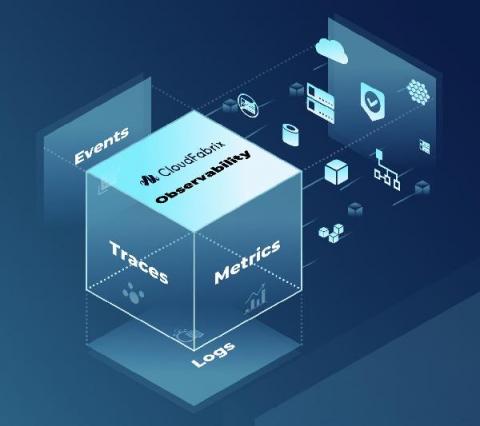
CloudFabrix announces Observability-in-a-Box with Edge AI Capabilities to simplify and accelerate AIOps deployments

CloudFabrix is enhancing its AIOps platform with native Observability and AI at the edge capabilities to bridge the gap between Observability and AIOps solutions. Enterprises are struggling with unifying multitude of expensive monitoring deployments as well as gaps in observability, specifically for modern application architectures that include usage of microservices, containers and Kubernetes.


Protecting PHI in Slack: Nightfall adds DLP (and value) to Perry Health

Pan Chaudhury created Perry Health in 2017 to streamline healthcare delivery. He and his co-founders envisioned a digital health tool to assist healthcare providers in managing chronic conditions like diabetes and hypertension by coordinating care and communication. Perry Health supports better healthcare outcomes by monitoring and engaging with patients when they’re not in the doctor’s office.

Denmark's Largest Utility Company Accelerates Incident Response

As Denmark’s largest power, utility and telecommunications company servicing 1.5 million customers, Norlys understands the need for fast response to security alerts. When the company first started, the Norlys security team built their own log analytics and incident response capabilities from the ground up. This homegrown approach presented challenges, including manual workflows, too many repetitive tasks and difficult-to-maintain processes.

CybersecAsia Awards 2020 recognizes ManageEngine for its leadership in cybersecurity

ManageEngine’s Log360 was recently honored with the CybersecAsia Award for the Best User and Entity Behavior Analytics software application. The award certifies the important role, and the innovative technology brought to the table by Log360 over the past two years. Elevated cybersecurity risks currently experienced by organizations have driven the sudden adoption of the cloud and increased workforce mobility.

What is a virtual CISO?

Organization’s today host a wide range of information that, due to its external value to competitors, nation-states, or cybercriminals, needs to be properly protected. The role of a Chief Information Security Officer (CISO) is to establish and maintain the organizational strategy and execution to protect its sensitive and valuable information assets and surrounding technologies.

SecTor 2020, Canada's Biggest Cybersecurity Event: Day Two

Even though SecTor had to be entirely online this year due to our unusual international circumstances, there have been plenty of excellent talks from many experienced cybersecurity professionals. The talks took place over the course of two days, October 21st and 22nd. Last time I covered the talks I attended on day one. Interestingly enough, the talks all had to do with threat detection and analysis. Maybe that’s just what I’m fixated on these days.

What is Policy Compliance? Four Tips to Help You Succeed

Policy compliance within the information security space can be an exhausting concept to wrap our heads around. Writing a policy document, publishing it to staff and then staying hands-on to ensure it is followed in perpetuity is easily seen as an arduous, if not an impossible, task. Policies set the basis for every successful information security initiative.

Splunk Data Stream Processor & Splunk Phantom - The Need For Speed

What is the benefit of combining the power of Data Stream Processor (DSP) and Splunk Phantom? I will give you a hint - the answer involves speed and extensibility. In today's security landscape, speed to detect and mitigate security attacks or outages is of the utmost importance. A slow response to a security incident can have a detrimental impact to your organization's bottom line.

CISA Strategy for 5G Security and Resilience

In August 2020, the Cybersecurity and Infrastructure Security Agency (CISA) released its strategy to ensure the security and resilience of 5G infrastructure in the United States. Roughly every 10 years, the next generation of mobile communication networks is released, bringing faster speeds and increased capabilities.