Security | Threat Detection | Cyberattacks | DevSecOps | Compliance

duckdb npm packages compromised

Over night, starting at 01:16 UTC on September 9th, we were alerted to more packages being compromised, these included: These packages all had a new version 1.3.3 released (In the case of the wasm version, it was version 1.29.2), which contained the same malicious code as we saw in the compromise of packages with 2 billion+ downloads.

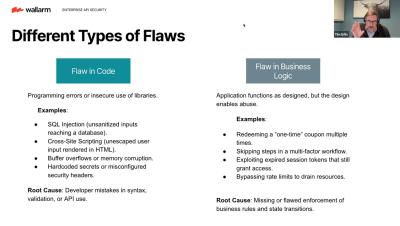
This API Security Mistake Could RUIN Your Business #apitesting #hacking_or_secutiy #apisecurity

Testing your APIs after deployment is one of the biggest mistakes teams make. By the time vulnerabilities are discovered in production, the risk is higher, fixes take longer, and attackers may already exploit them. In this short clip from our API Security webinar, we explain why “shift-left” testing — securing APIs before deployment — is critical to prevent breaches.

Guide to the OWASP Top 10 for LLMs: Vulnerability mitigation with Elastic

Industries, governments, and enterprises of all kinds have adopted large language models (LLMs) and generative AI (GenAI) into their operations and workflows, unlocking new possibilities for everything from customer interaction to complex data analysis. But with this innovation comes new challenges for security, observability, and data science teams.

Over 50% of Enterprise External Assets Lack WAF Protection, Including PII Pages

In our day-to-day work and conversations with security experts, one concern comes up regularly: how consistent is our WAF protection? Our answer is always the same: not as much as you think. The truth is that in the case of enterprises, web application firewall (WAF) coverage is rarely uniform. Protection is often a mixed bag of products from different vendors, managed by separate teams, each guarding only part of the attack surface.

Patch vs. Workaround: How CVEs Actually Get Fixed

In order to collect various security-related metrics, Bitsight scans the entire internet, collecting a unique set of data that enables us to carry out a variety of studies that would be extremely difficult for any other company to conduct. One of the metrics that we collect is related to the presence of certain vulnerabilities. For this, we need to take into consideration all possible mitigation strategies that are available and that allow us to reduce the risk.

Collaboration is Key: How to Make Threat Intelligence Work for Your Organization

Recent cyberattacks on retailers in the UK and the U.S. are now shifting to target the financial sector, with news on breaches reaching headlines almost daily. These stories track how today’s threat actors operate: they are strategic, pivot quickly, exploit weak links and are highly opportunistic. This opportunism means that if threat actors discover an unlocked door in one business within an industry, they will try every door within that industry to find a common weakness.

5 Steps to Operationalize Threat Exposure Management

Security teams are drowning in findings, but only a fraction of exposures actually put the business at risk. Treating every issue as equal spreads resources thin, slows down remediation, and leaves critical systems exposed. Threat Exposure Management (TEM) changes the equation by forcing teams to focus on the exposures most likely to cause real damage – and to build the operating model that ensures they get fixed.

Announcing JFrog AppTrust: Building Unshakeable Trust in Every Application You Deliver

The pressure to deliver applications quickly has created a complex software supply chain that is vulnerable to more threats than ever before. New regulations are shifting the liability to software developers, demanding auditable proof of security across the entire product lifecycle. Caught between velocity and complexity, the critical question is this: Can you truly vouch for the integrity, security, and compliance of every application that leaves your pipeline? What about after it’s deployed?