Security | Threat Detection | Cyberattacks | DevSecOps | Compliance

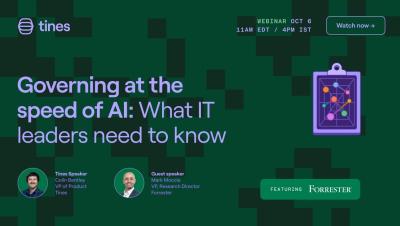
Governing at the speed of AI: What IT leaders need to know

AI is reshaping the IT leadership role faster than any shift in the last decade. As AI makes it dramatically easier to build software (agents, apps, automations, and more), the volume of software entering the enterprise is far beyond what IT teams have had to govern before. That shift demands new ways of thinking about enterprise control: how security, access, and oversight evolve to keep pace with software that's built faster and by far more people than ever before. The leaders who treat this as an operating shift, not just a technical one, are the ones expanding their influence.
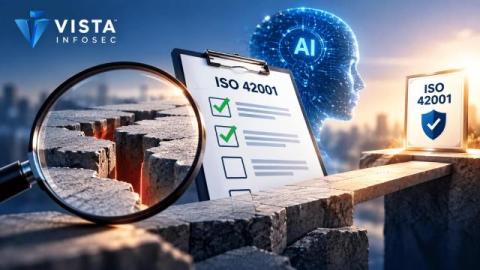
ISO 42001 Gap Analysis: What to Check Before Starting Certification

An ISO 42001 gap analysis compares how you govern AI today with what ISO/IEC 42001:2023 requires. Do it before you commit to audit dates. You’ll learn what’s missing, what you can’t yet prove and what to fix first. Quick answer What it is: a structured review of your AI management system (AIMS) against ISO/IEC 42001:2023 clauses 4–10 and the applicable Annex A controls. Is it mandatory? No. The standard requires an internal audit and management review, not a gap analysis.

Understanding Asymmetric Routing Risks in Modern Firewall Deployments

In modern network environments, maintaining both operational efficiency and strong security controls requires careful design and planning. One of the more common challenges Sophos Professional Services encounters, especially during firewall upgrades or redesigns, is asymmetric routing.

The Attribution Trap: What Happens When Threat Actors Manipulate the Story of an Attack?

Imagine waking up Monday morning to discover you’ve been breached. The attacker has stolen sensitive financial data, set up persistent access, and then greets you with a lovely ransom note at 8:00 a.m. demanding money in exchange for the encryption key. Immediately, you reach out to your security operations team, and they quickly begin assessing the damage and reviewing the breadcrumbs left behind.

What Is Cyber Insurance? Why Is It Important?

Cyberattacks can disrupt business operations to the extent that it may take days or even weeks for businesses to restore their operations. Attackers can expose sensitive data, selling it on the dark web or using it to extort ransom payments from organizations. While there are cybersecurity measures that organizations can take, those measures only prevent and respond to these incidents rather than stopping them entirely. This is where cybersecurity insurance becomes important.

Lost in Translation: A Native Heap Overflow in Unmaintained Jansi (CVE-2026-8484)

Jansi is the small Java package that makes colored console output work everywhere, including the Windows terminals that never understood ANSI escape codes. You may not have heard of it, but if you build Java, you almost certainly have it on disk: the Apache Maven 3.9.16 distribution puts jansi-2.4.3.jar in its lib/ directory, and Maven's pom.xml declares it as a dependency.

Build the Self-Driving SOC with Tanium Security Operations

Attackers don't wait for humans, and neither should your SOC. Tanium Security Operations brings detection, investigation, hunting, and response together on one platform that moves at machine speed. See how Tanium Atlas works as an extension of your team: pulling live telemetry, historical activity, and the full process tree the moment a threat surfaces, hunting a hypothesis across every endpoint in your fleet, and containing threats from one endpoint to hundreds of thousands. When the hunt needs to go deeper, HuntIQ's hands-on experts take it from there, inside your environment.

Frontier AI Impact Series, Part 1: Why Attackers Stopped Waiting for Zero-Days | Bitsight

Frontier AI can shrink weeks of vulnerability research into exploitation in hours. What does that mean for the flaws your team deprioritized years ago? Bitsight’s Emma Stevens, Senior Threat Intelligence Advisor, breaks it down in the first video of our new series.

Govern the AI agent as the identity it is

AI agents are non-human identities. They hold credentials, carry permissions, and act on systems around the clock, usually with standing access nobody reviews. The Salesloft Drift breach reached more than 700 organizations through exactly that kind of over-scoped, non-expiring token, with no prompt injection involved. The controls already exist: inventory every agent, scope it to least privilege, expire its access, review it on a schedule, and detect when it's abused.