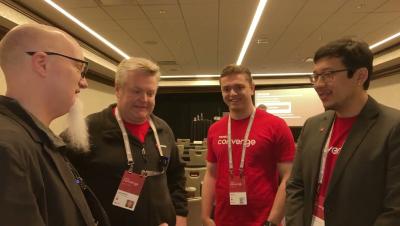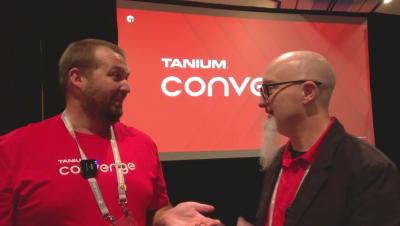
In the past year, research indicates that nearly a third of organizations have accelerated their plans to automate key security and IR processes, while another 85% plan on automating them in the next 12 months. Despite the positivity of these statistics, many organizations struggle to change to a more automated process. This was highlighted at a recent webinar we held with a panel of senior cybersecurity experts from a multitude of sectors.
Facebook Messenger is one of the most popular messaging platforms in the world, amassing 988 million monthly active users as of January 2022, according to Statista. One important feature of this platform is Messenger’s bot. Within the current digital landscape, chatbots are widely used by companies and individuals to connect with their customers online, and almost immediately pops up when chatting with brands or businesses.
At Sysdig, we are constantly looking for ways to improve the security posture of the organizations that we work with. One of the areas we continuously improve upon is our platform’s threat intelligence and detection capabilities that leverage the open-source Falco project. We incorporate threat intelligence sourced from our own strategically placed honeypots, data collection systems, and multiple other open-source feeds.
Containers revolutionized how we build, deploy, and run applications with increased speed, agility, and scalability. But, as often happens with transformative technologies, they require an evolution to security strategy. Centralized deployments inside a protected perimeter gave way to continuous and distributed deployment of containers, creating a growing, dynamic, and distributed attack surface. IT and security teams were left blind and exposed in the cloud.
Today, Netskope announced it has been awarded, through SEWP Prime Anacapa Micro and distributor Merlin Cyber, the industry’s first Secure Access Service Edge (SASE) U.S. Federal Civilian Government contract in history, led by the United States Patent and Trademark Office (USPTO). This is a significant industry milestone as traditional, perimeter-based approaches to security will no longer work in a mandated cloud-first environment where data can be accessed from anywhere.
Cyber attacks and data breaches are top of mind for businesses around the world as attacks on vulnerable networks persist. It is more important than ever to ensure cyber security and resilience programs are in place for your business and third-party suppliers. The information and communications technology (ICT) supply chain is a globally-interconnected ecosystem that involves CT software, hardware, and services including suppliers, vendors, and contractors.
Leaders from the SEC, Cyber Threat Alliance, and National Association of Corporate Directors recently joined with SecurityScorecard to share their insights on the state of cybersecurity risk management today. Earlier this month, the New York Department of Financial Services (NY DFS) announced efforts to modernize their supervision process, with the creation of the Cybersecurity and Information Technology Baseline Risk Questionnaire (CIBRQ).