Recent campaigns show a consistent pattern: a supply chain attack compromises trusted software to reach the credentials held by developer machines and CI/CD pipelines.
Ed Kost, Content Strategist at UpGuard, gave us a day in the life. Turns out there's a lot more to a cybersecurity content strategist than vendor risk management. We hire talented people and let them be themselves, which is how you end up with someone like Ed. Every UpGuardian brings a little something extra to the team. UpGuard helps organizations manage third-party risk (TPRM) and monitor their attack surface. But great security work starts with a team of people worth spending your day with.
Ask ten people what "AI regulation" means, and you'll get ten different answers, and most of them will assume the others are talking about the same thing. They're not. "Regulate AI" has become a catch-all phrase covering several genuinely distinct regulatory questions, each with its own goal, its own toolkit, and its own plausible answer, bundled together so tightly that arguing about one gets mistaken for arguing about all of them.
Enterprises aren't standardizing on one AI agent platform. Security teams are watching Copilot run alongside ChatGPT Enterprise, homegrown agents built on internal frameworks, and endpoint coding agents like Claude and Codex, often all inside the same organization. Each platform brings its own credentials, tool access, and blind spots, and none of them wait for a security review before taking an action.
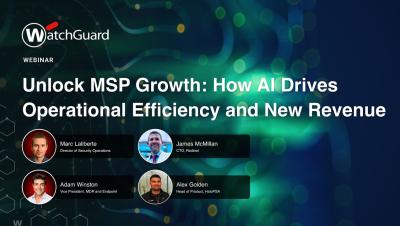
Artificial intelligence is no longer a future consideration for MSPs because it is already reshaping how leading providers run their businesses, protect their clients, and create new revenue streams. Separating real business value from hype requires a clear-eyed, practitioner-driven perspective.
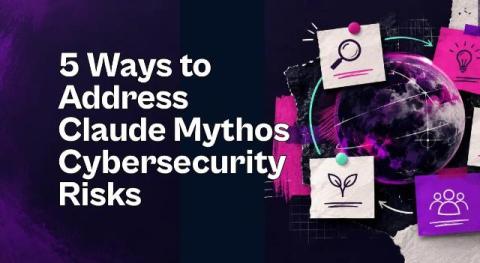
To address Claude Mythos cybersecurity risks, security teams need to adapt for a world where AI can accelerate the path from vulnerability discovery to exploitation. That means moving toward continuous exposure management, shortening the time from discovery to verified remediation, prioritizing based on real exploitability rather than severity alone, reassessing older software as new risks emerge, and making AI usage part of the organization’s broader exposure picture.
Cisco has disclosed a critical authentication bypass affecting Cisco Identity Services Engine (ISE) and Cisco ISE Passive Identity Connector (ISE-PIC). Tracked as CVE-2026-76460, the vulnerability allows an unauthenticated, remote attacker to send a crafted request to an affected API endpoint and bypass the web-based management interface. The vulnerability received the highest possible CVSS v3.1 score of 10.0.
When Anthropic introduced Mythos Preview, the story practically wrote itself. Here was a frontier AI model taking work that once required researchers and threat actors a lot of time and compressing it into hours. Mythos demonstrated the ability to find and exploit vulnerabilities across major operating systems and browsers. In controlled testing, it produced a working Firefox code-execution exploit in less than an hour and developed eight in roughly 12 hours.
AI adoption is outpacing enterprise control. The 2026 Verizon DBIR found that 45% of employees regularly use AI on corporate devices, and 67% of those users access AI through non-corporate accounts. Cyberhaven Labs reports that 39.7% of data sent to AI tools is sensitive, while endpoint AI app adoption grew 509% year over year.
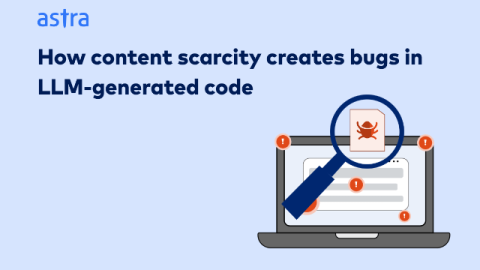
Large language models are now a core part of the software development lifecycle. The 2025 Stack Overflow Developer Survey found that 82% of developers used OpenAI’s GPT models in their work last year, and Google has reported that AI now writes over 25% of new code committed at the company. All of that rests on one assumption. The model understands what you asked, and its answer is accurate.