Stop "lift and shift" disasters. Understand data center talk, then migrate app by app. Leverage cloud-native controls or trusted third-party firewalls for seamless connectivity.
Written by Bill Moore, CEO & Founder TL;DR In Part 1 of this series, I looked at how computing and telecommunications gradually became what we now call Enterprise IT. That change did not happen because someone decided to merge two departments. It happened because the technologies, the systems, and the work they supported became too interconnected to describe separately.
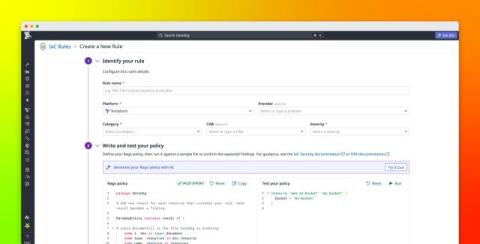
Infrastructure-as-code (IaC) security scanning can catch common misconfigurations before deployment, but every organization also has internal requirements that a default rule catalog cannot cover. For example, teams may need to enforce required tags, approved instance types, or naming conventions. With custom rules for Datadog IaC Security, security and platform teams can define these requirements as Rego policies and run them alongside Datadog’s default rules during IaC scans.
The encryption protecting today’s data isn’t broken, but it does have a timeline. This video breaks down why current systems like TLS, PKI, and RSA remain secure today, and how quantum computing will change that. As progress accelerates toward large-scale quantum machines, organizations must prepare for a new era of security. Learn how PQC (post-quantum cryptography) helps address emerging risks like “harvest now, decrypt later,” and why tracking adoption of quantum-safe encryption is critical now, not later.
Not every high-severity vulnerability represents the highest risk. Learn why effective prioritization requires more than a CVSS score and how factors such as reachability, exploitability, active exploitation, and asset criticality provide the context needed to focus remediation efforts where they matter most.
On 17 September 2026, users on X (formerly Twitter) posted that payment details belonging to other individuals had appeared on the Cineworld app under their personal accounts. On 17 September 2026, users on X (formerly Twitter) posted that payment details belonging to other individuals had appeared on the Cineworld app under their personal accounts.
MSSPs are being asked to secure more clients, across more industries, with more tools than ever before. This post explains why simply adding another threat feed to the stack doesn't solve the problem, and what MSSPs need to operationalise intelligence at scale.
A critical SQL injection vulnerability has been identified in cPanel & WHM’s EmailTrack functionality. The vulnerability was disclosed by cPanel on September 8, 2026, affecting every supported release line. It allows an authenticated cPanel account holder with mail related privileges to ultimately achieve root-level code execution on the underlying host.
SLH-DSA is NIST’s standardised post-quantum digital signature algorithm (hash-based). It generates quantum-resistant signatures, ensuring signatures are not changeable and that they will not be forged, even when later superseded by schemes like RSA and ECDSA, which are susceptible to attacks by quantum computers. Organisations are studying it today because large-scale quantum computers could, in the future, crack the algorithms that currently underpin most digital trust.
When people think about online privacy, they usually consider email addresses, phone numbers, social media accounts, or browsing activity. Vehicle information rarely comes to mind. Yet a car can develop its own extensive digital footprint. A Vehicle Identification Number may connect publicly accessible auction listings, photographs, mileage readings, damage descriptions, specifications, and sale information that remain searchable long after the original event.