Security | Threat Detection | Cyberattacks | DevSecOps | Compliance

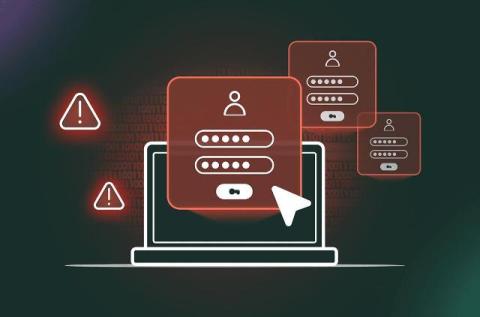
How to Strengthen Your Network Security with LDAP Injection Defense

As organizations continue to rely on directories to store critical information such as user credentials, access permissions, and organizational data, the security of these directories becomes even more vital. LDAP (Lightweight Directory Access Protocol) is widely used for storing and managing this information. However, this reliance also makes LDAP directories a prime target for malicious attacks, with one of the most dangerous being LDAP injection attacks.

NGINX Integration: Protect Your API Gateway with Astra

NGINX is a widely used API gateway that efficiently manages API requests, but securing API traffic requires continuous monitoring. By integrating Astra’s API Security Platform with NGINX, you can enhance security by analyzing API requests in real time and detecting vulnerabilities before they are exploited.

Top 10 Cybersecurity Threats WAFs Prevent

A Web Application Firewall (WAF) is your first line of defense against internet traffic that can be both legitimate and malicious. It helps protect your web applications, websites, and servers from various cyber-attacks by filtering out harmful traffic. WAF (WAAP) is essential for web security as it quickly identifies and addresses vulnerabilities in applications and servers.

Why Manufacturing Needs SASE: Securing Smart Factories and Global Operations

Imagine you’re the Director of IT for a global manufacturing company. You must keep production sites, suppliers, and remote workers securely connected while controlling costs and meeting compliance. Every day, new challenges arise: If this sounds familiar, you’re not alone. Manufacturing is rapidly evolving with Industry 4.0, where smart factories use automation, IoT, AI analytics, and real-time data to optimize production and efficiency.

Why East/West Traffic Needs Zero Trust

Zero trust is no longer just a concept—it’s essential. With cloud adoption, hybrid work, and increasingly sophisticated cyber threats, traditional perimeter security no longer suffices. Attackers exploit vulnerabilities inside networks, moving laterally undetected. Many organizations focus on securing north-south external-facing interactions while failing to monitor internal east-west traffic. This oversight exposes networks to ransomware, insider threats, and supply chain attacks.

The Benefits of Simplified Network Security

Networking and infrastructure and operations (I&O) teams often feel that they are facing contradictory challenges. They are expected to manually maintain the complex legacy infrastructure that keeps the business running, while also finding capacity and licence to help their organizations innovate at a time of rapid technological change.

Hacking the Boardroom: How to Get Executive Buy-in for Security

One of the biggest challenges CISOs face isn’t just choosing and implementing the right approach. Sometimes the biggest challenge is getting buy-in. That's exactly what Forescout CEO, Barry Mainz and industry expert Michael Cunningham CISM, CRISC, CIPP will be discussing in this upcoming event!

Security Bulletin: Critical Vulnerabilities in Kubernetes Ingress NGINX Controller

CVE-2025-1974 is a critical remote code execution (RCE) vulnerability in Kubernetes’ Ingress-NGINX Controller that allows unauthenticated attackers with network access to inject arbitrary NGINX configuration directives, potentially leading to full cluster compromise. Ingress-NGINX is a software-only ingress controller provided by the Kubernetes project. Because of its versatility and ease of use, ingress-nginx is quite popular: it is deployed in over 40% of Kubernetes clusters.

CVE-2025-1974: Critical Unauthenticated RCE Vulnerability in Ingress NGINX for Kubernetes

On March 24, 2025, ingress-nginx maintainers released fixes for multiple vulnerabilities that could allow threat actors to take over Kubernetes clusters. Ingress is a Kubernetes feature that defines how workload Pods are exposed to the network, while an Ingress Controller implements those rules by configuring the necessary local or cloud resources. According to Kubernetes, ingress-nginx is deployed in over 40% of Kubernetes clusters.