Security | Threat Detection | Cyberattacks | DevSecOps | Compliance

How a Global Bank Nearly Eliminated Audit Response Time

Across the financial sector, compliance teams face rising expectations from regulators and customers alike. Agencies such as the SEC, OCC, FDIC, CFPB, and the European Banking Authority now demand proof of continuous compliance—not point-in-time reports. Yet most financial institutions still depend on spreadsheets, manual command-line checks, and tribal knowledge to validate security controls.

Satellite Internet in Developing Nations: Challenges and Opportunities

Internet connectivity is the backbone of modern society. From education and healthcare to commerce and governance, access to reliable internet has become a critical driver of social and economic development. Yet, while urban hubs across developed nations enjoy high-speed broadband and 5G networks, large parts of the developing world remain disconnected.

It all comes down to the data: unlocking the potential of AI in the SOC

This is a fascinating moment. Whether you think Generative AI is over-hyped or not, our technology landscape has been shocked by capabilities we couldn’t imagine a few years ago. And I do mean shocked. What’s underway is too rapid and uncanny to describe in terms of evolution. We are living through something different.

Web Application Firewalls (WAFs): A false sense of security?

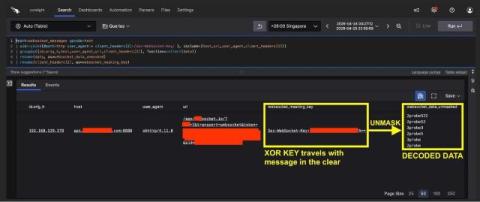
Web application firewalls (WAF) is a protection mechanism to help block potential malicious requests before they can reach the application itself. Often this is implemented as a proxy, intercepting HTTP requests, analyzing them, and finally deciding on an action. While effective, over relying on it could lead to a false sense of security that allows attackers to exploit unresolved internal issues.

Create a Reusable Function to Validate Configuration Settings Across Device Types

In a typical enterprise environment, NTP server configurations may differ not just between vendors, but even across OS variants within the same vendor. Ensuring that these configurations are correct and standardized is critical for time synchronization, which underpins security, logging, and automation.