In our new threat briefing report, Forescout’s Vedere Labs leverages a list of IP addresses known to be used by Killnet hacktivists during past attacks to study their TTPs when attacking a series of honeypots we control.
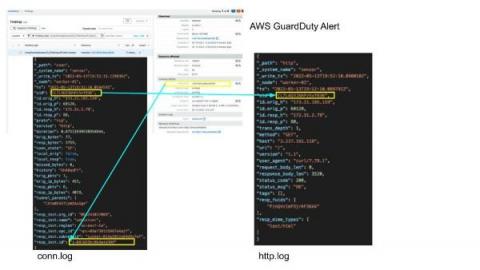
In this post, we show how enriching Zeek® logs with cloud and container context makes it much faster to tie interesting activity to the container or cloud asset involved.In cloud or container environments, layer 3 networking is abstracted away from the higher-level tasks of running workloads or presenting data. Because of this abstraction, when Zeek logs are collected for cloud or container network environments, the attribution of a network flow to actual workload or application is difficult.
As the number of remote workers grows, virtual private networks (VPNs) are becoming a popular way to grant remote access to employees while hiding online activities from attackers. With a VPN, your organization can secure network traffic between your site and users by creating an end-to-end secure private network connection over a public network. In this article, you will learn how a VPN works, what protocols are needed, what challenges are involved, and what alternatives are available.
Across a health system’s digital terrain, the most vulnerable assets are connected medical devices. If those devices become compromised, the infiltration could impact a patient’s privacy, health and safety. Moreover, it could shut down care delivery for days, weeks or longer, with long-lasting financial and reputational impacts. According to Deloitte, an estimated 70% of medical devices will be connected by 2023.
Nowadays, Wi-Fi networks are among the most commonly used networks, making them a go-to target for cyber attacks. An attacker with basic tools and knowledge can crack 70% of Wi-Fi networks.