MIME (abbreviation for Multipurpose Internet Mail Extentions) is a worldwide standard introduced in 1991. In this article, we will discuss what it is and why it is important. As the technology introduces new ways to communicate and conduct business, our business operations become much more reliant on the data transfer and the Internet itself.
With a majority of the workforce now adopting a work-from-home routine, maintaining the normal functioning of your network and ensuring compliance with industry standards is not an easy job. When employees are working remotely, it is especially crucial to ensure network compliance with industry standards and internal policies to secure your network from cybersecurity breaches.
In the new normal, if your business has chosen remote operations, this might attract malicious actors. Hackers prey on the remote workforce whose vulnerability has increased in multifold ways. While infrastructural concerns, such as working outside the corporate IT network and using home Wi-Fi are inevitable, other issues, including using personal devices and retaining privileges to access more than required business resources add to the magnitude of this vulnerability.
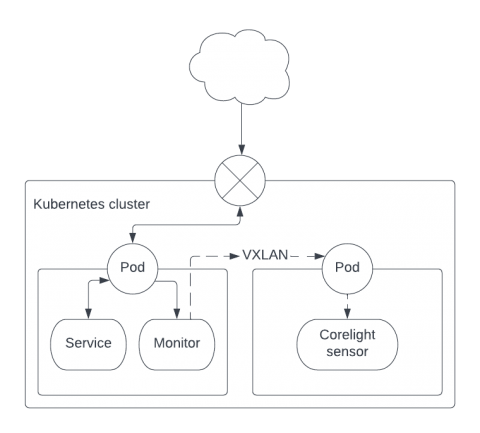
As our enterprise customers build out large, multi-cluster Kubernetes environments, they are encountering an entirely new set of security challenges, requiring solutions that operate at scale and can be deployed both on-premises and across multiple clouds.
Working from home has become our new normal, with many of our jobs being performed remotely. The experience of working remotely can be as seamless as it was from our workplace, with all the technological advancements available today. Businesses have also put network security on the forefront by implementing use of virtual private networks (VPNs). This enables users to securely access confidential information hosted on the organizations’ servers.
The Health Insurance Portability and Accountability Act, also known as HIPAA, is a compliance standard that was implemented after all health-related information was digitized. The crux of the act is to ensure that all sensitive electronic protected health information (ePHI) has restricted, secure access. Various aspects of your network determine your compliance with HIPAA standards. Let’s discuss some of these important components in detail.