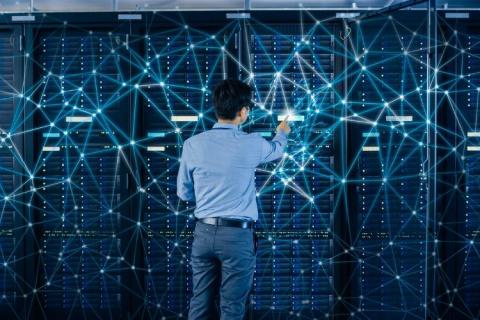
A firewall is a security device that controls the flow of traffic across a network. A firewall may be a hardware appliance, or it may be a piece of software that runs on a third-party operating system. Firewalls operate based on a set of pre-defined, as well as customizable security rules that inspect network traffic to block or permit access to a network.
When talking to infrastructure and operations teams, one common concern when moving to a SASE architecture is the loss of visibility and control that they have historically been accustomed to. Overnight traffic destined for critical business applications, both private and public, routes through what is often seen as a black box, or in today’s world, more of a “gray cloud.”
For infrastructure and operations (I&O) teams, the transition from legacy architectures to a modern zero trust architecture is far from straightforward. Teams often face a complex patchwork of fragmented and siloed systems of different vintages, along with the challenge of managing dozens of disparate security and networking vendors.
High availability may be top of mind for your organization, and if not, it really should be. The cost range of an unplanned outage ranges from $140,000 to $540,000 per hour. Obviously, this varies greatly between organizations based on a variety of factors specific to your business and environment. You can read more on how to calculate the cost of an outage to your business here: Gartner.
The transition to cloud-based environments has ushered in unparalleled efficiency, scalability, and innovation. However, it has also magnified the importance of fortifying our digital fortresses against an array of potential risks. Considering the increasing reliance on cloud computing, it’s important to find the best practices and strategies that organizations can adopt to enhance their cloud security posture and mitigate the risks associated with cloud-based environments.
For remote work and hybrid working environments where we are now more dispersed the central collection point for traffic captures is within the cloud. Networking, infrastructure and operations, and security teams require traffic visibility for troubleshooting, performance monitoring, threat detection, discovery of assets, and to address compliance use cases.
Like all modern cloud providers, Amazon adopts the shared responsibility model for cloud security. Amazon guarantees secure infrastructure for Amazon Web Services, while AWS users are responsible for maintaining secure configurations. That requires using multiple AWS services and tools to manage traffic.
Before your organization can move business applications to the cloud, it must deploy network security solutions that can reliably block cybercrime and malware. Firewalls are essential cybersecurity tools that protect network traffic against threat actors. There are many different types of firewalls available, but put the same basic principles in action.