ClearScore selects Netacea for bot protection
UK's leading free credit score and credit marketplace protects customer data from account takeover and credential stuffing attacks.


An estimated 38 billion devices are connected to the internet this year, highlighting the fact that the Internet of Things (IoT) is not a farfetched futuristic concept, but the reality for most of the modern world. Many of these connected devices are toys that children enjoy, but no matter how fun they may be, challenges have come to the surface due to privacy concerns and socio-political issues pertaining to gender-neutral toys.
It’s often said that humans are the weakest link in cybersecurity. Indeed, I’d have a hard time arguing that a computer that was sealed in a box, untouched by human hand, poses much of a security risk. But a computer that is unused has no purpose. It behooves security practitioners to get smarter about how we teach people to use those machines so that both humans and computers can work together to safely accomplish greater things.
Since NIST Cybersecurity Framework is the best solution for better prevention, detection, and response to cybersecurity incidents, various organizations have adopted it to safeguard their IT assets. The 2019 SANS OT/ICS Cybersecurity Survey spells out the NIST CSF as the number one cybersecurity framework in use today. However, it is imperative to consider that how should we comply with NIST CSF in 2020 and beyond? Here is some help!
This post outlines why endpoint telemetry is now fundamental to reducing the time taken to identify and remediate security incidents.
In this blog, we will cover the various requirements you need to meet to achieve NIST 800-53 compliance, as well as how Sysdig Secure can help you continuously validate NIST 800-53 requirements for containers and Kubernetes.
Today’s security operations require coordinated efforts from multiple team members, many of whom are in different roles and technology specializations. Complexity inhibits the ability to conduct time-sensitive operations such as incident response. Security engineers and the threat hunters have to be on the same page when it comes to establishing priorities and conducting investigation, across the entire detection & response lifecycle.
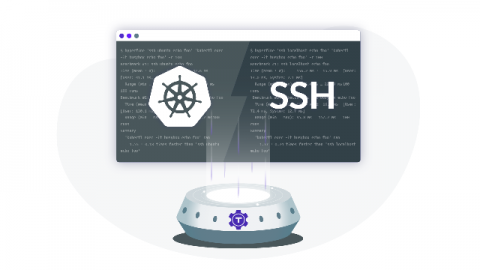
Teleport 4.4 is here! The major innovation we’re introducing in this version is much improved control over interactive sessions for SSH and Kubernetes protocols. We’ll do a deeper dive into session control later, but for those who aren’t familiar with it, Teleport is an open source project. It provides access to SSH servers and Kubernetes clusters on any infrastructure, on any cloud, or any IoT device, anywhere, even behind NAT.