Security | Threat Detection | Cyberattacks | DevSecOps | Compliance

How Security Teams Can Tackle Information Overload and Work Smarter

The modern security professional drowns in data every single day. Between threat intelligence reports, compliance documentation, vendor assessments, and incident logs, there's simply too much to read and not enough hours to read it. This isn't just frustrating. It's a genuine security risk. When critical information gets buried under mountains of PDFs and reports, threats slip through the cracks. The good news? There are practical strategies and tools that can help security teams cut through the noise. Let's explore how to manage this avalanche of information without burning out your team.

Regaining control after identity theft: A step-by-step guide

Identity theft is no longer a singular occurrence but now one of the most dangerous and disruptive online risks that affect an escalating number of people worldwide. Whether your identity is used to obtain loans, make purchases, or complete official procedures, underlying each case of theft is the painful truth that your personal information is in the hands of a stranger.

LLM Red Teaming: Threats, Testing Process & Best Practices

LLM red teaming is a proactive security practice that involves systematically testing large language models (LLMs) with adversarial inputs to find vulnerabilities before deployment. By using manual or automated methods to probe for weaknesses, red teamers can identify issues like harmful content generation, bias, or security exploits, which are then addressed through a continuous “break-fix” loop to improve the model’s safety and reliability.

CloudFire: Delivering cloud excellence to Italian SMEs with Acronis Cyber Protect Cloud

Acronis is proud to celebrate its longstanding partnership with CloudFire, an innovative Italian cloud service provider that has been transforming how small and medium-sized enterprises (SMEs) approach data protection and business continuity. Based in Reggio Emilia, CloudFire has established itself as a leader in cloud services that put simplicity and scalability at the forefront. In recognition of this commitment to excellence, CloudFire was named Service Provider of the Year 2025.

2026 IT predictions: Summary from our latest webinar

Predicting the future of technology is rarely straightforward. Just when a trend seems permanent, a new innovation or disruption shifts the landscape entirely. To help IT leaders navigate these changes, Last month 11:11 Systems hosted our annual webinar featuring a panel of experts from 11:11 Systems, Cohesity, and Hewlett Packard Enterprise. Our subject matter experts unpacked the trends that defined the past year and explored what lies ahead for 2026.

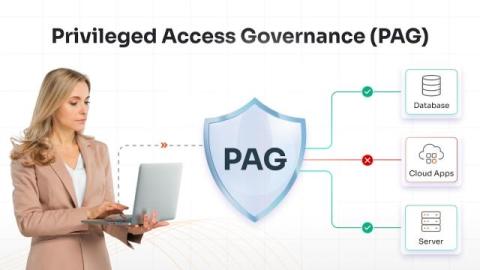
Just-in-Time Access Policy Design for Cloud Security Teams

Just-in-Time access is widely accepted as a best practice for reducing standing privilege. The challenge for most organizations is not deciding to use JIT, but designing access policies that actually reduce risk without slowing engineers down. Security teams want tighter controls, stronger auditability, and less standing access. Engineering teams need fast, predictable access to do their work. When approval policies are too rigid, teams get blocked or work around controls.

Top 5 Enterprise Cloud Security Solutions to Consider in 2026

You’re likely dealing with a cloud footprint that grows faster than your ability to govern it. New workloads appear overnight. Developers spin up serverless services without telling security. SaaS systems store sensitive data outside your visibility. And identities connect everything together, which means one compromised token can trigger a multi-cloud incident. This constant expansion creates a monitoring gap—one that attackers understand better than anyone.

YOLO Mode: Hidden Risks in Claude Code Permissions

What permissions are developers granting to Claude Code, and could those permissions pose a risk if the coding agent were exposed to malicious inputs? To answer this question, we turned to GitHub, the website where developers go to share their private configuration files. From Github we collected a dataset of 18,470.claude/settings.local.json files, each containing the permissions that a user granted to Claude Code for a software project.